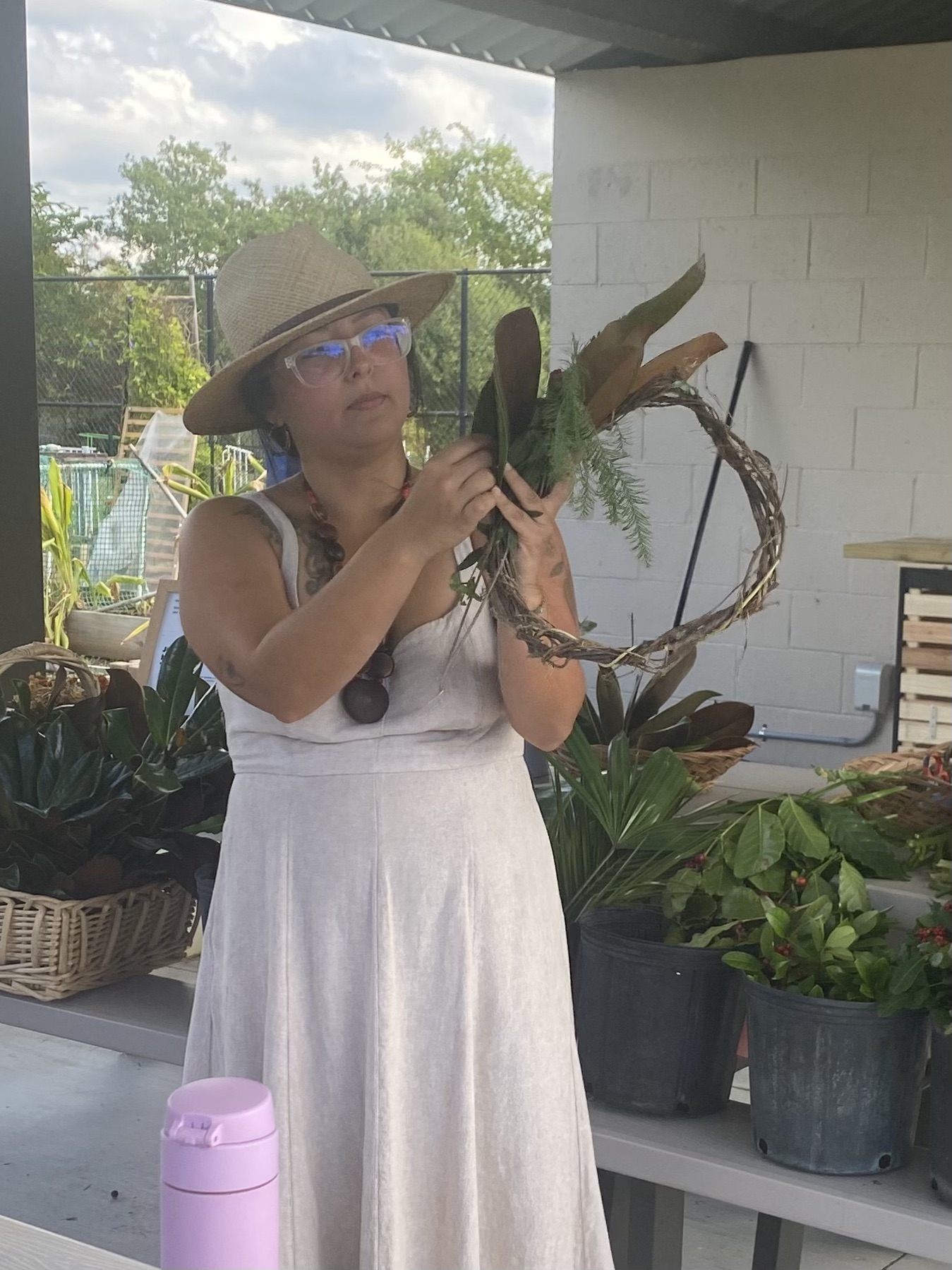
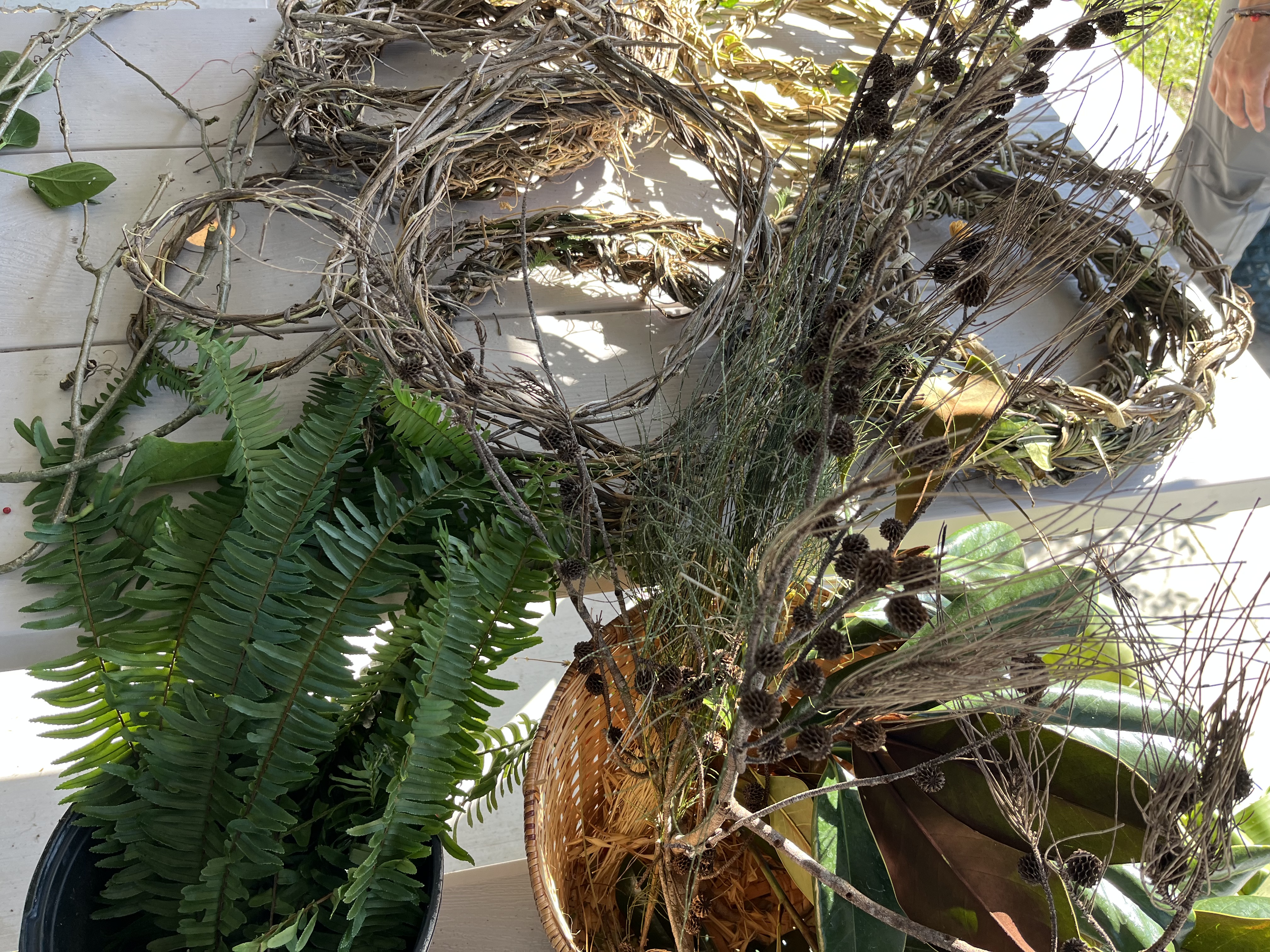
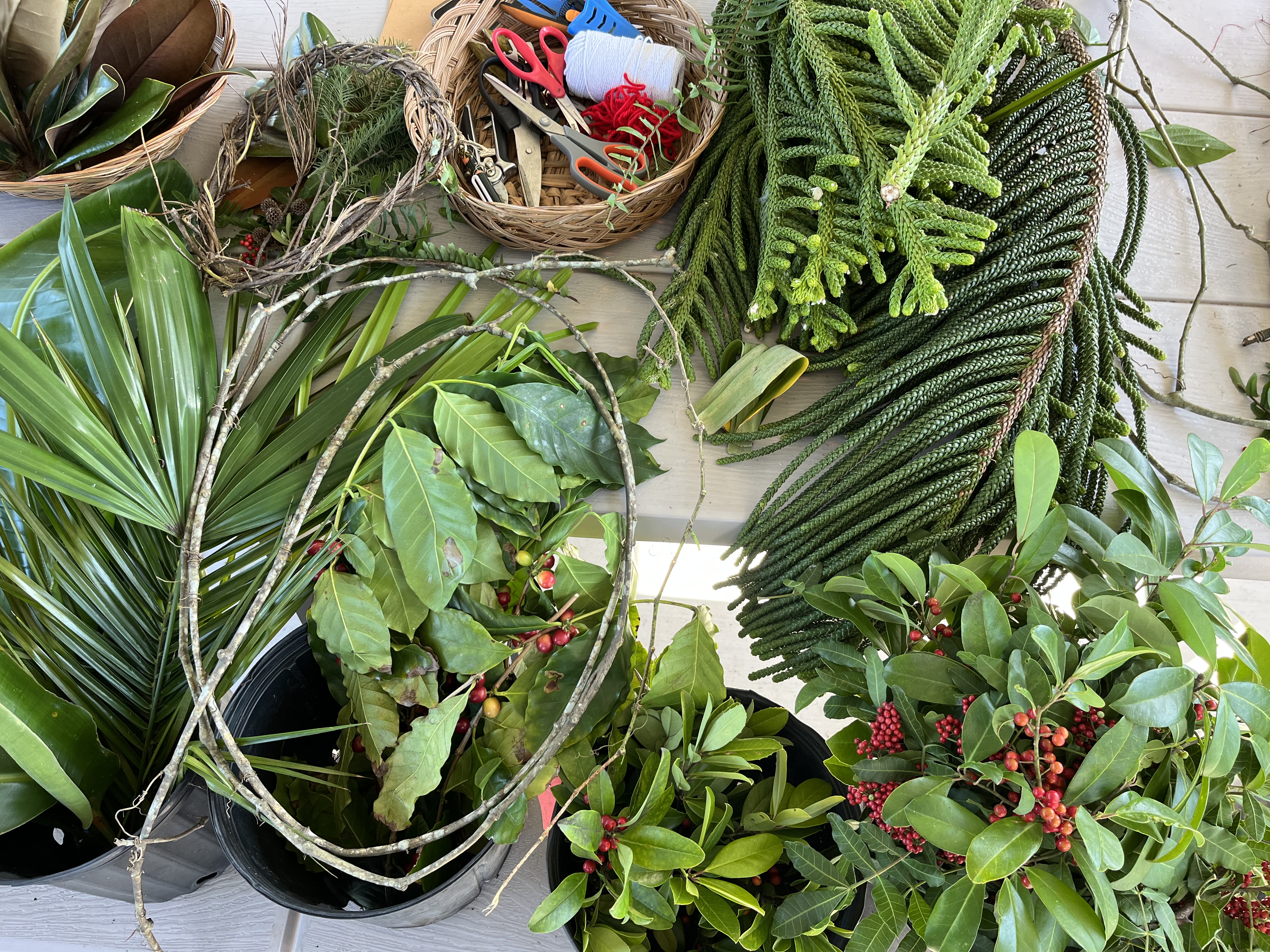
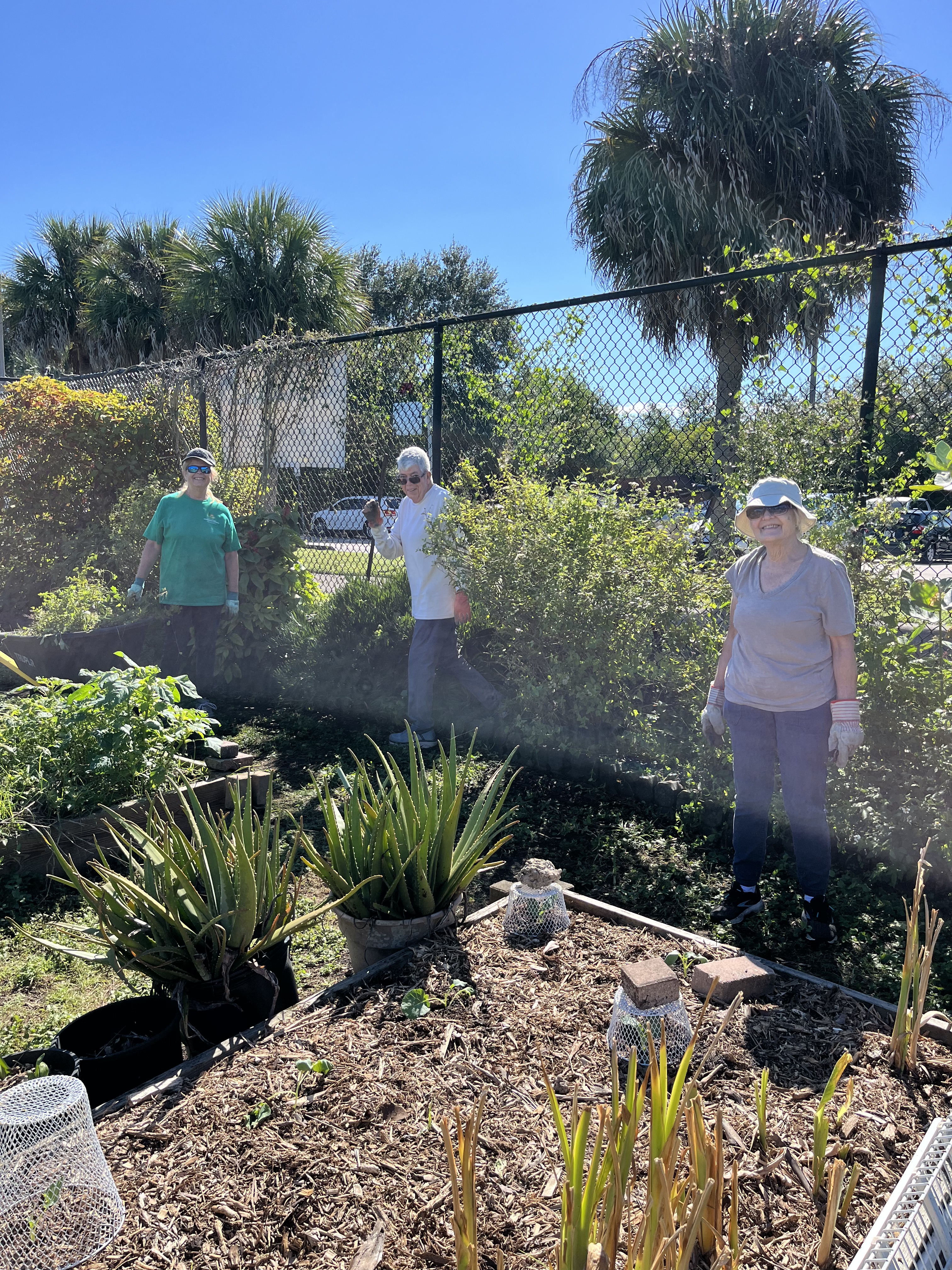
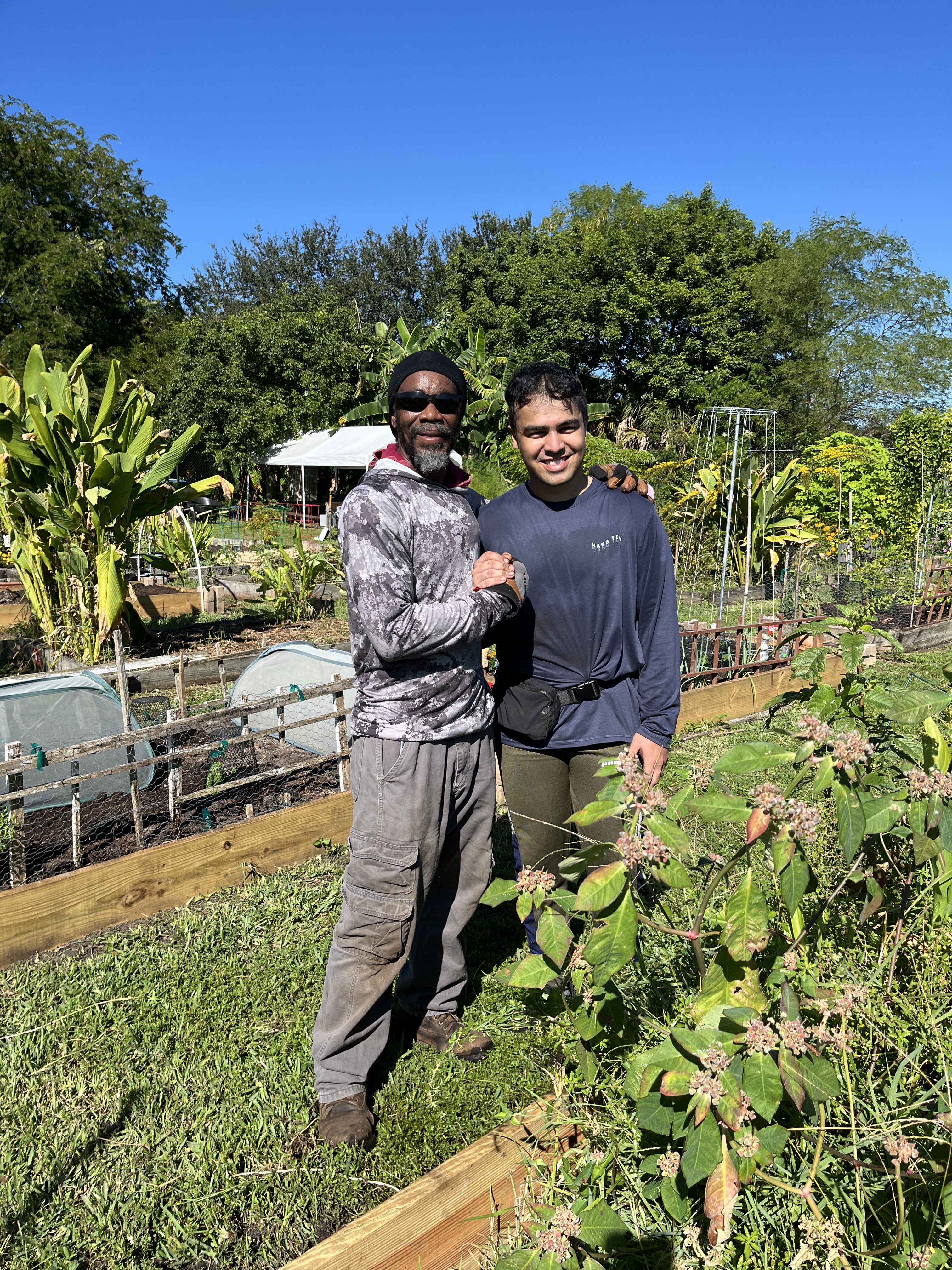
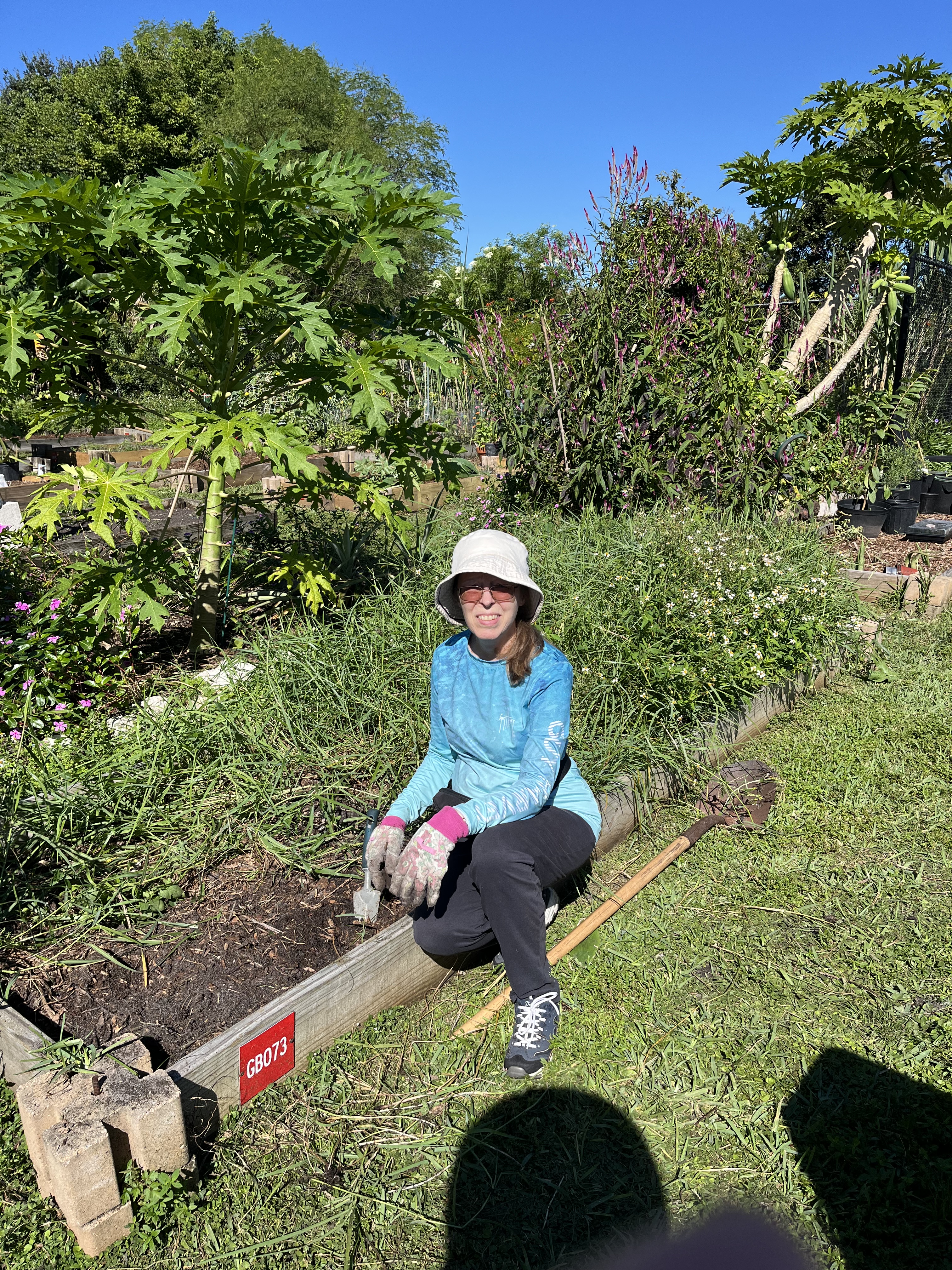
On November 22nd the Community Garden held a Florida Wreath Workshop for members and friends. The facilitator was Sheila Gutierrez who very thoughtfully demonstrated the creative uses of Florida vines and plants for making beautiful holiday wreaths. Participants learned to craft beautiful, one-of-a-kind wreaths from start to finish. Sheila showed everyone how to use pliable Florida vines to create the wreath base, then adorn it with a variety of natural elements like pinecones, Spanish moss, and dried seed pods. It was a great opportunity to learn a new skill, connect with local flora, and take home a unique piece of decor for your home. While all the materials were provided, the gardeners only needed to bring one thing – their imagination! Participants were smiling and laughing as they shared their final product
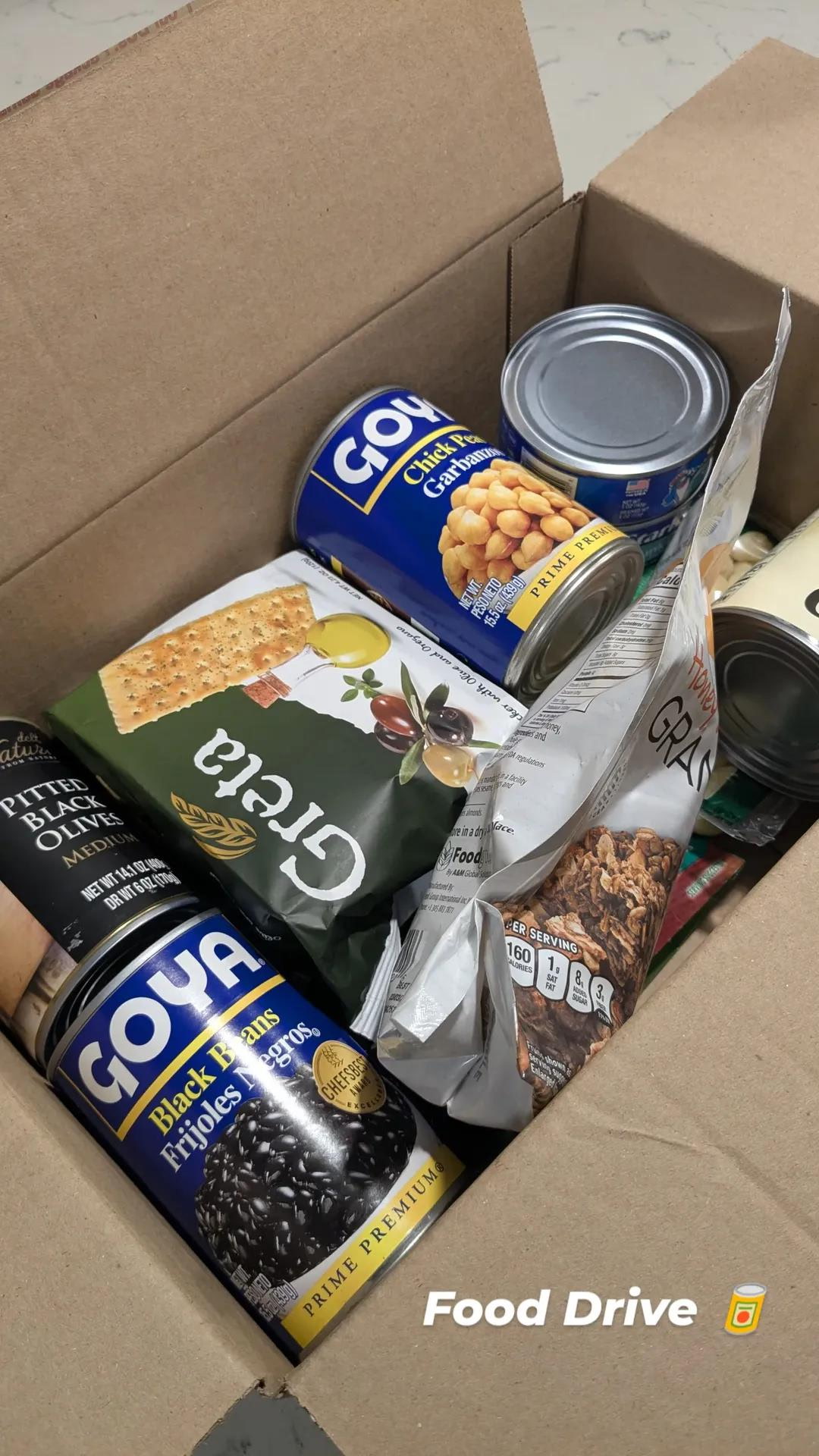
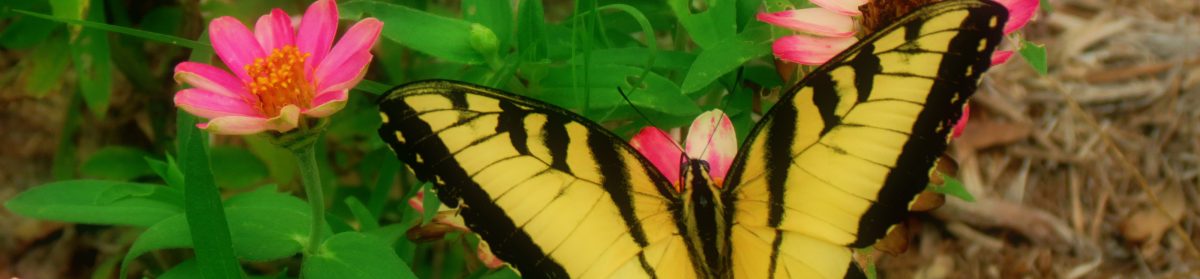
The gorgeous weather on November 1st drew our volunteers to the garden! Everyone was engaged in weeding, watering, mulching and building while the butterflies and bees were also “working the flowers.” After a hot and rainy summer, our gardeners enjoyed the sunshine and mild weather as they prepared for another successful gardening season. Canned goods were collected to donate to the Royal Palm Christian Church Food Bank as well. We raffled gifts after sharing food and stories to make the work day complete. Thank you to all those who came out! The garden looks beautiful!
If you search for herbal teas on the internet, you find that this beneficial flower is available from commercial tea companies and has also been included as an ingredient in herbal tea blends. You may wonder why this little flower is taking the tea world and gardening world by storm! People are exploring butterfly pea flower tea for its potential to support focus, digestion, and stress relief—without relying on synthetic supplements. Butterfly Pea flower It is packed with antioxidants and is safe to drink either hot or cold. It can also be enjoyed blended with other herbal teas. It’s fun to explore it’s color changing properties. Add a squeeze of lemon and the blue tea turns purple! So easy to grow and if you walk through the garden you will see the vines growing in gardeners’ boxes.
Florida weather is not kind to anything that is outside all year – especially anything made of wood! Like our garden boxes. The heat and rain wears down the wood until it is breaking down. Well, thanks to the efforts of a few, those broken boxes have been rebuilt. Braving the heat and humidity, and using a lot of muscle, these awesome volunteers rebuilt 10 boxes! Our thanks go out to them for their hard work.
From left to right – Suresh, Pranay, Les, Angel, Eric, John, Satya, Antoinette
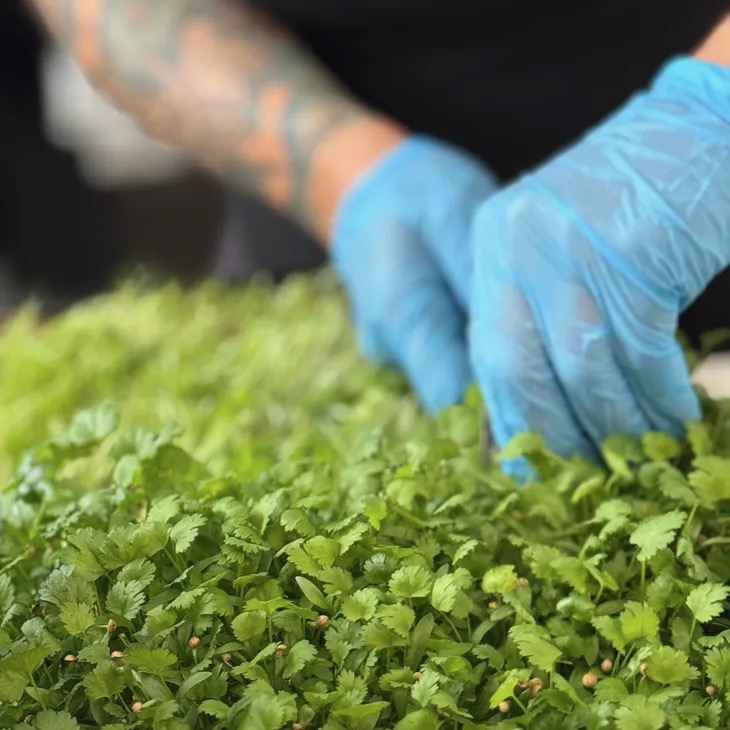
What a story! One of the gardeners at our community garden was introduced to the power of micro greens this past year. As a chef, Brianne Olivera recognized the value of these nutritional powerhouses and how they could be incorporated into our meals. This sparked an idea in her head and now she has developed her idea into a business! That is how Roots and Shoots was born. She uses a grow to order model-a customer orders what they want and Brie grows it and the delivers to their door. So easy! Researchers are discovering more about the power of Microgreens every day and including them in your diet is extremely beneficial to your health. Click on the link below to order your micro greens from Brianne.
Rootsandshoots.farm
If you would like to learn more about micro greens, visit Microgreens World on the internet.
Tomatoes, peppers and eggplant are popular vegetables that folks look forward to growing in their gardens. While gardeners enjoy growing these vegetables successfully during the fall, winter and spring here in South Florida, it becomes a challenge during the long days of summer.
The reason is simple – it is too hot! When temperatures are 89 degrees or higher during the day and 78 at night, the heat inhibits pollen production and photosynthesis. In other words, the plant will grow very slowly and fruit will not set.
There are a few choices for gardeners. Let the garden rest – and mulch, cover crops or solarize – and prepare the your next season. OR, plant species that are subtropical and love the heat and rain!
Saturday, March 15th, a class was held under the pavilion to learn about the benefits of making herbal teas from plants in the garden. Besides learning about the benefits of individual plants, gardeners were able to participate in a “tea tasting.” A tea made from one herb is called a “simple.” Making a simple tea allows you to discover the flavor and effect the tea has on you. Experimenting with that tea is called “simpling.” Making hot or cold infusions, testing the potency when it is steeped longer, or blending with another tea.
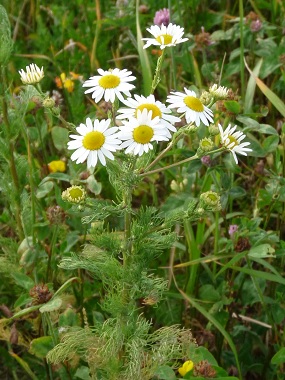
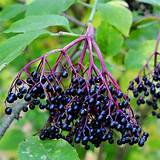
Butterfly PeaChamomileElderberry
Herbal Infusions can strengthen our immune system, ease our cold and flu symptoms, and are a gentle support for many physical ailments. They also make great companion plants for your vegetables! Please keep a few things in mind:
If you are pregnant or have a serious health issue, please ask your doctor before consuming any tea.
A single herb is known as a “simple.” Experimenting with that herb is called “simpling,” and it is the best way to test the flavor and effect of each herb. Get to know your herbs and how they make you feel.
Harvest your herbs in the morning after the dew has has just dried. This is when the oil content is highest and you will get the best results. Harvest the plant and let dry away from sunlight without damaging the leaves.
When making infusions, unless otherwise instructed, use 1-2 teaspoons of dried leaves to a cup of hot water. Limit yourself to 3 cups a day.
5) While some plants have anti viral properties, they do not kill a virus, but work to protect cells from the virus. Herbal infusions have a supportive role to help the body.
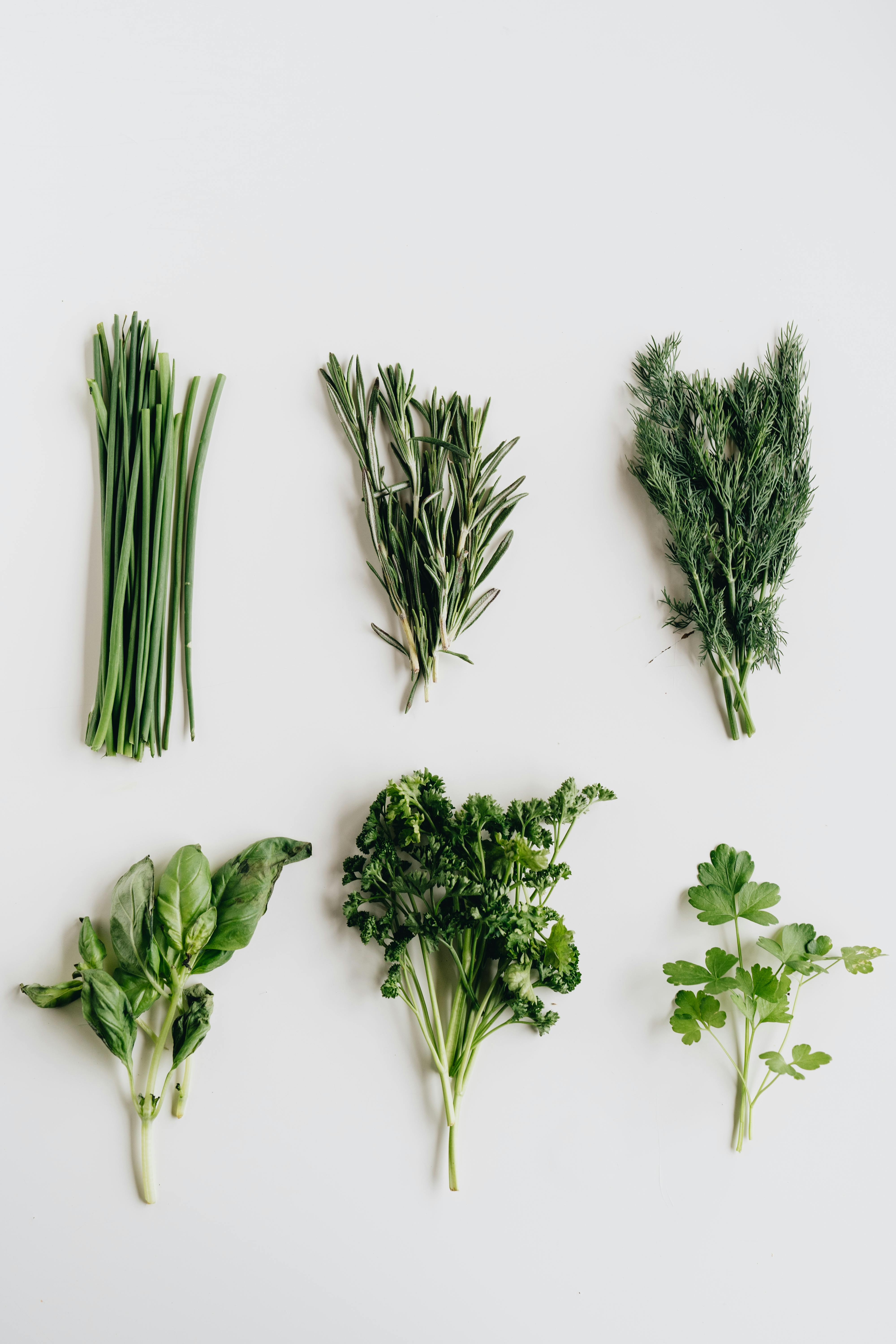
There are many herbal plants that impart health benefits when consumed. The following is a short list of some that are growing currently in our garden.
Most herbs are very easy to grow and they enrich our lives with their flowers, flavors and medicine. When harvesting herbs, you need to identify which part of the plant you need – the root, leaves, flowers or rhizome. Then you can decide when is the best time to harvest.
Herbs such as basil, thyme, mint and sage are best harvested when the flowers are about to open. That is when the oil content in the plant is at its peak. Flowering tops such as skullcap, golden rod, yarrow and hyssop are also best picked when the flowers are just about to open up.
The best time of day to pick flowers and leaves of herbs is in the morning after the dew has dried. Once harvested, be careful not to crush the fresh leaves or to leave them in the sun. You may use sharp scissors to cut at the base of the plant, and if the conditions are right, the plant will will regrow.
Drying Herbs
If your harvest is clean of bugs and dirt, there is no need to wash it. Pick through it to discard any discolored or damaged leaves or flowers. The point of drying is to eliminate the moisture in the plant quickly before it dies so it retains its properties when stored. You can dry them on a screen or some muslin cloth. Tie your herbs in loose bundles using rubber bands and hang them in an area that is warm, dry and shaded. They are dry when the leaves are crisp and snap rather than bend. It may take up to two weeks for some herbs to completely dry. Store in a clean glass jar rather than plastic. Label and date the plant. They do lose some of their potency over time.
Alternatives to Drying
There are a few other ways to preserve your herbs. Freezing, making ice cube herbs and infusing oil or vinegar with your herbs. Some herbs, like basil, are at their best when used fresh, so freezing will help the leaves retain their flavor. See the uploaded document for the best ways to preserve some of the types of herbs.
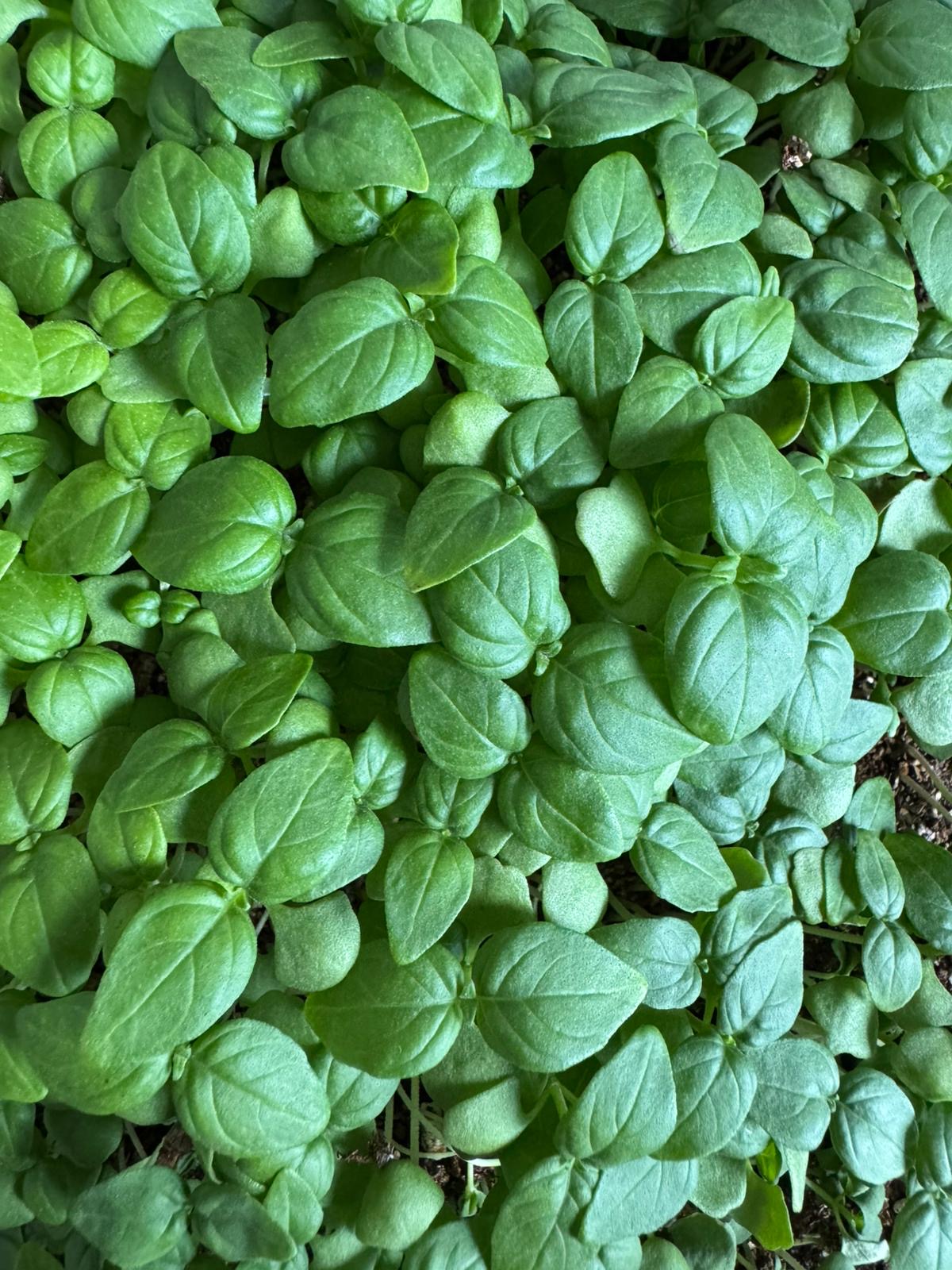
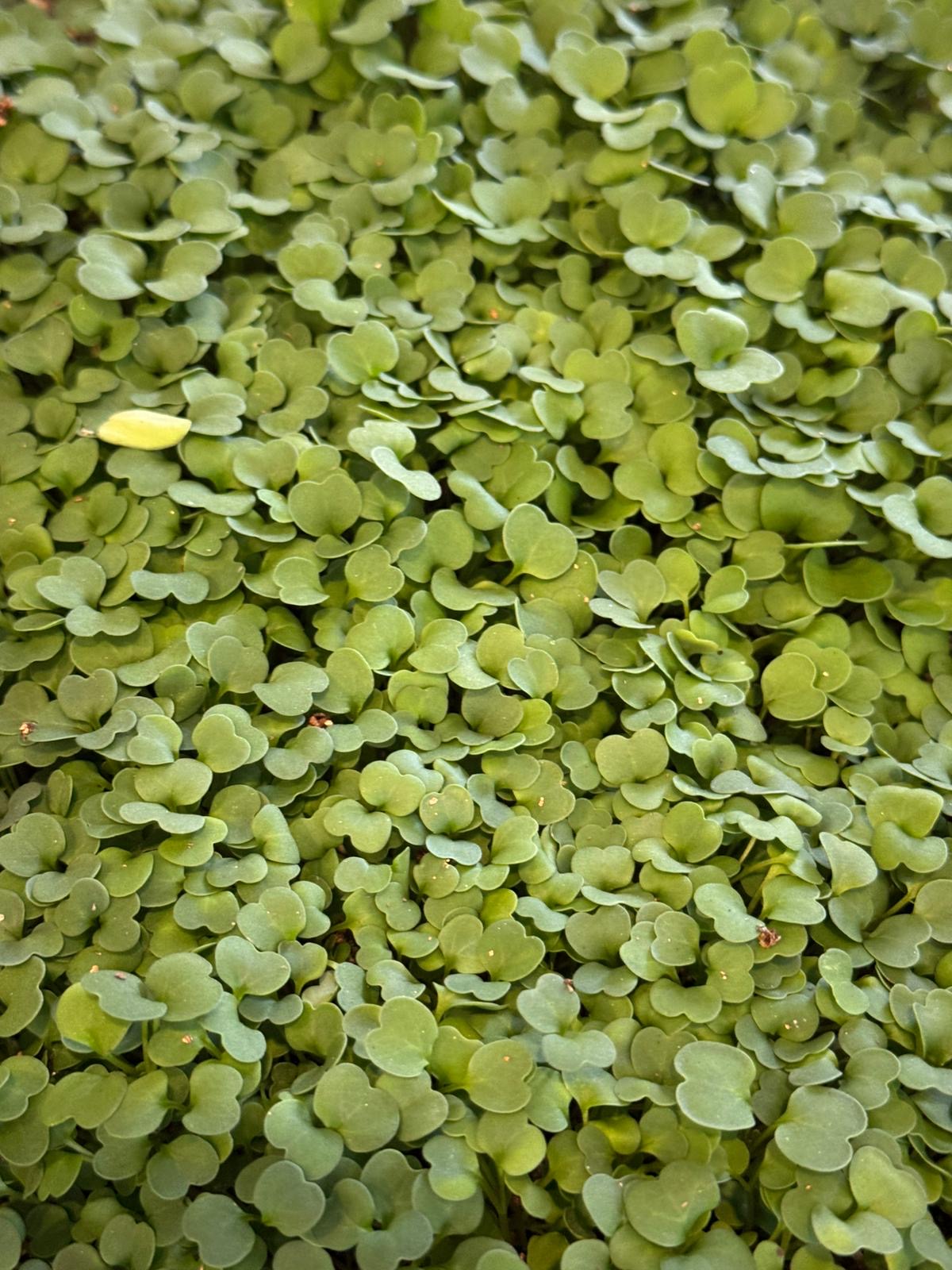
Why, you might ask. The top reason to grow micro greens is because they are so good for you! There are many varieties of micro greens, different flavors and colors, but they have two things in common. First, they have 4 to 40 times more nutrition than their mature counterparts. That’s right! Packed with vitamins and minerals that the body can easily use, when you eat micro greens you are helping your body stay healthy. Secondly, they are super easy to grow! Read more to find out.
Micro greens are a rich source of iron, zinc, magnesium, potassium, calcium, folate, manganese, and phosphorus. They are also full of antioxidants such as sulforaphane, polyphenols, and lutein. Sulforaphane is a powerful antioxidant that has been shown to have anti-inflammatory and anti-cancer properties. Polyphenols are a group of antioxidants that have been linked to a reduced risk of chronic diseases such as heart disease, diabetes, and cancer.
Micro greens are also a great source of fiber and protein. They are low in calories and high in nutrients, making them an ideal food for weight loss and overall health. Micro greens are also rich in vitamin C, vitamin A, and vitamin K. Vitamin C is an antioxidant that helps boost the immune system and promote healthy skin. Vitamin A is important for vision, immune function, and skin health. Vitamin K is essential for blood clotting and bone health. (Microgreen Starter, January 24,2025)
The fantastic thing about micro greens is how easy they are to grow! You can grow several varieties at once, or plant in succession so you always have some greens to harvest. Experiment with flavors and try something new. Download the growing guide below to begin.
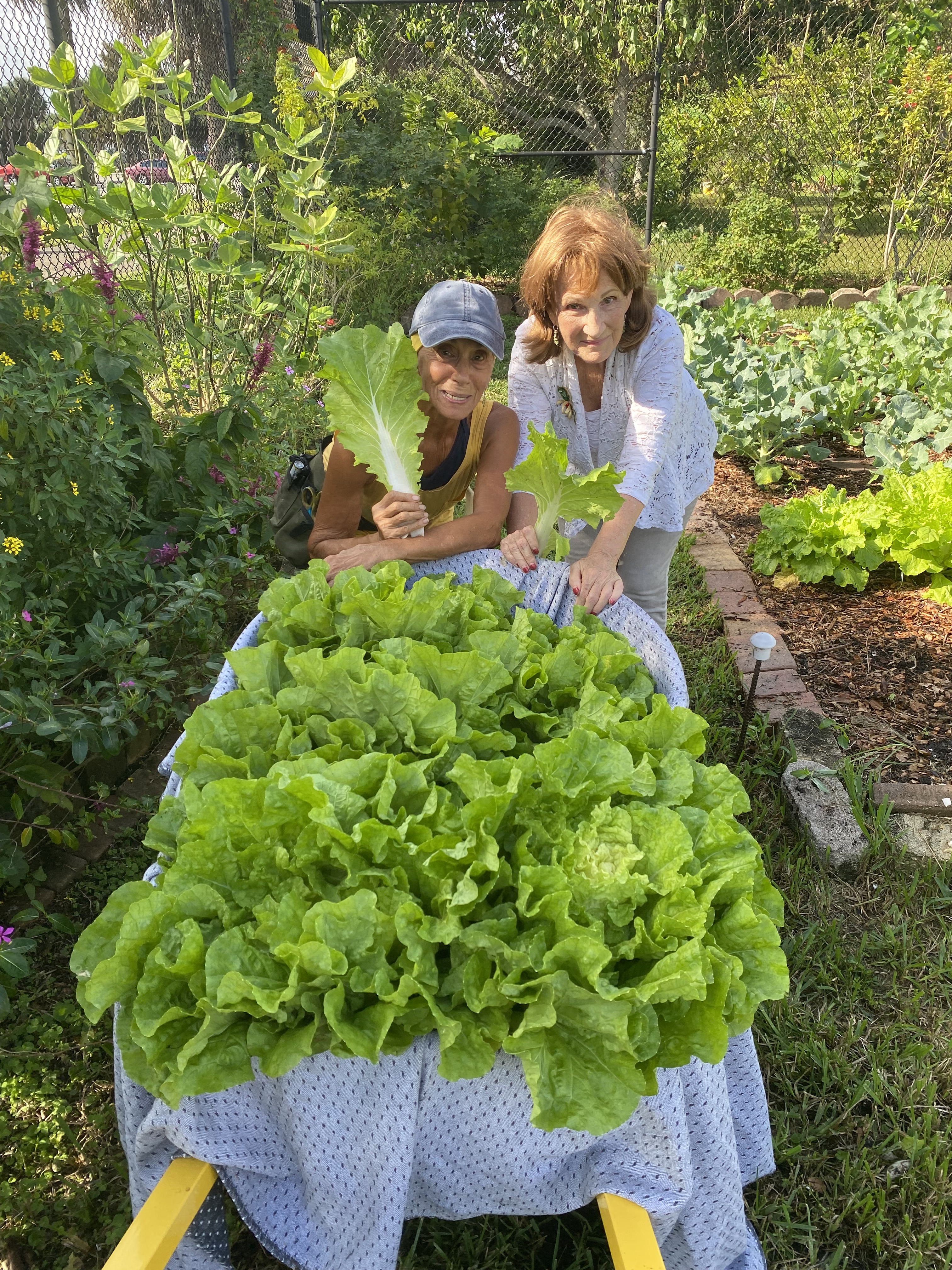
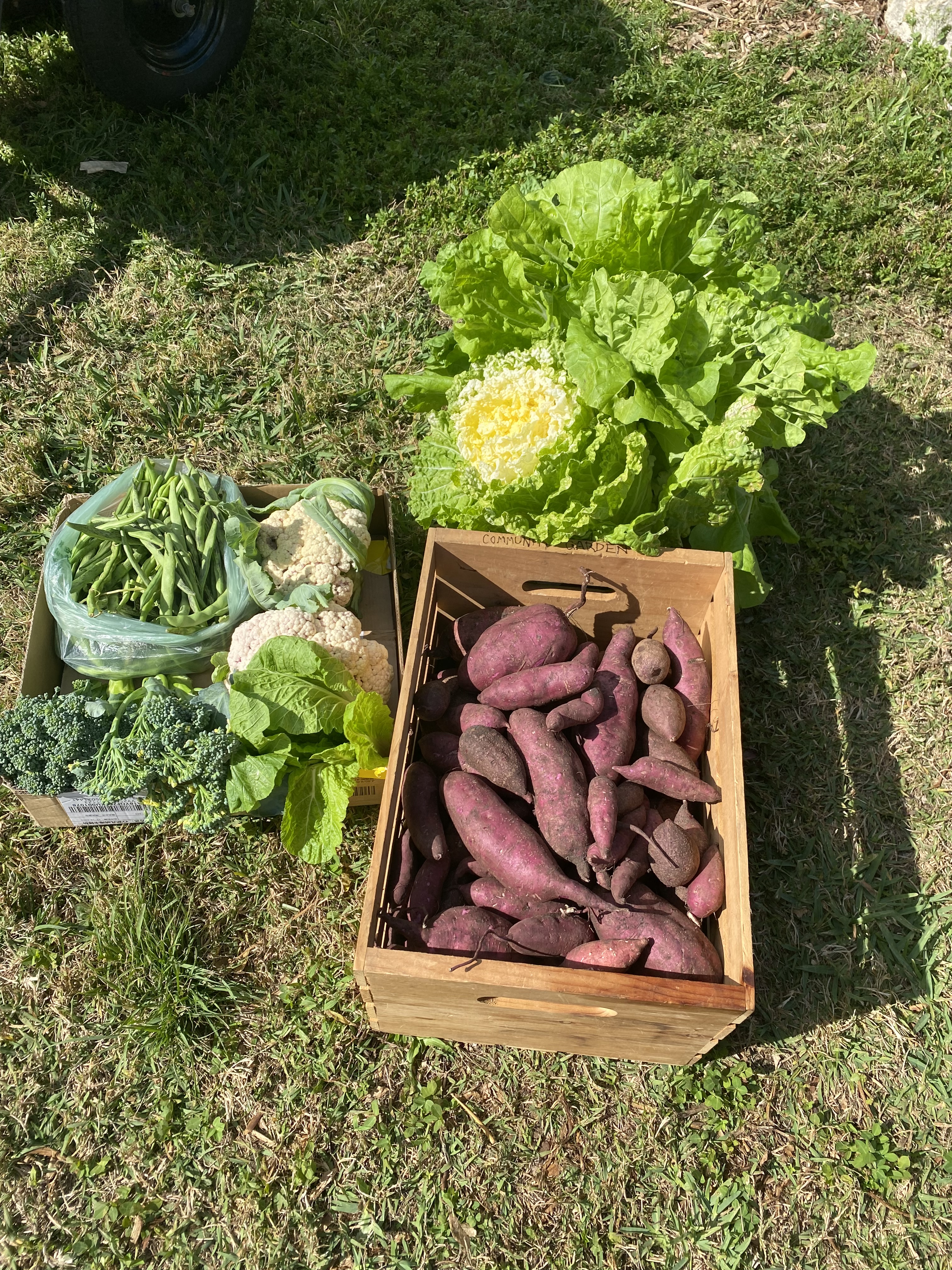
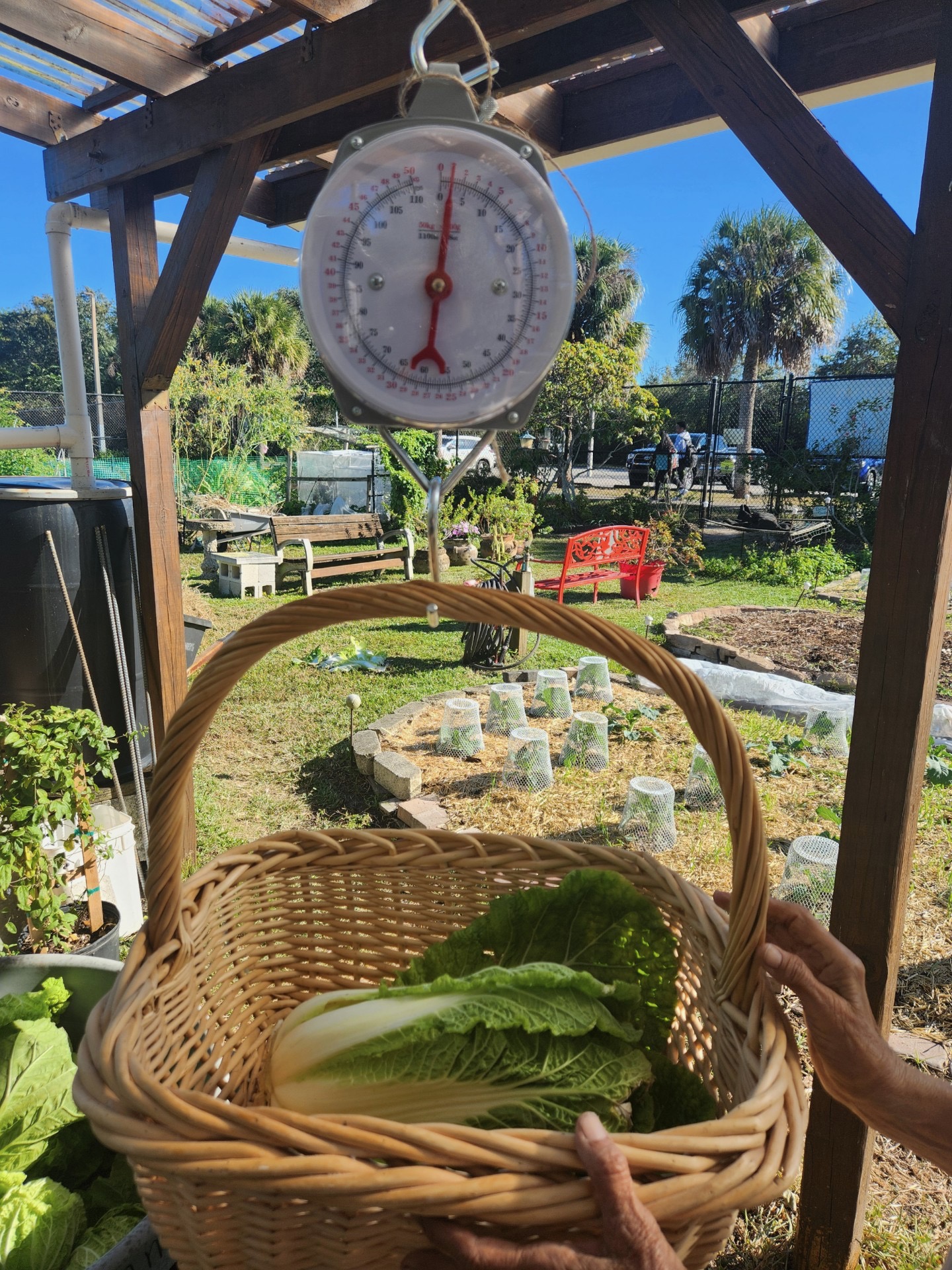
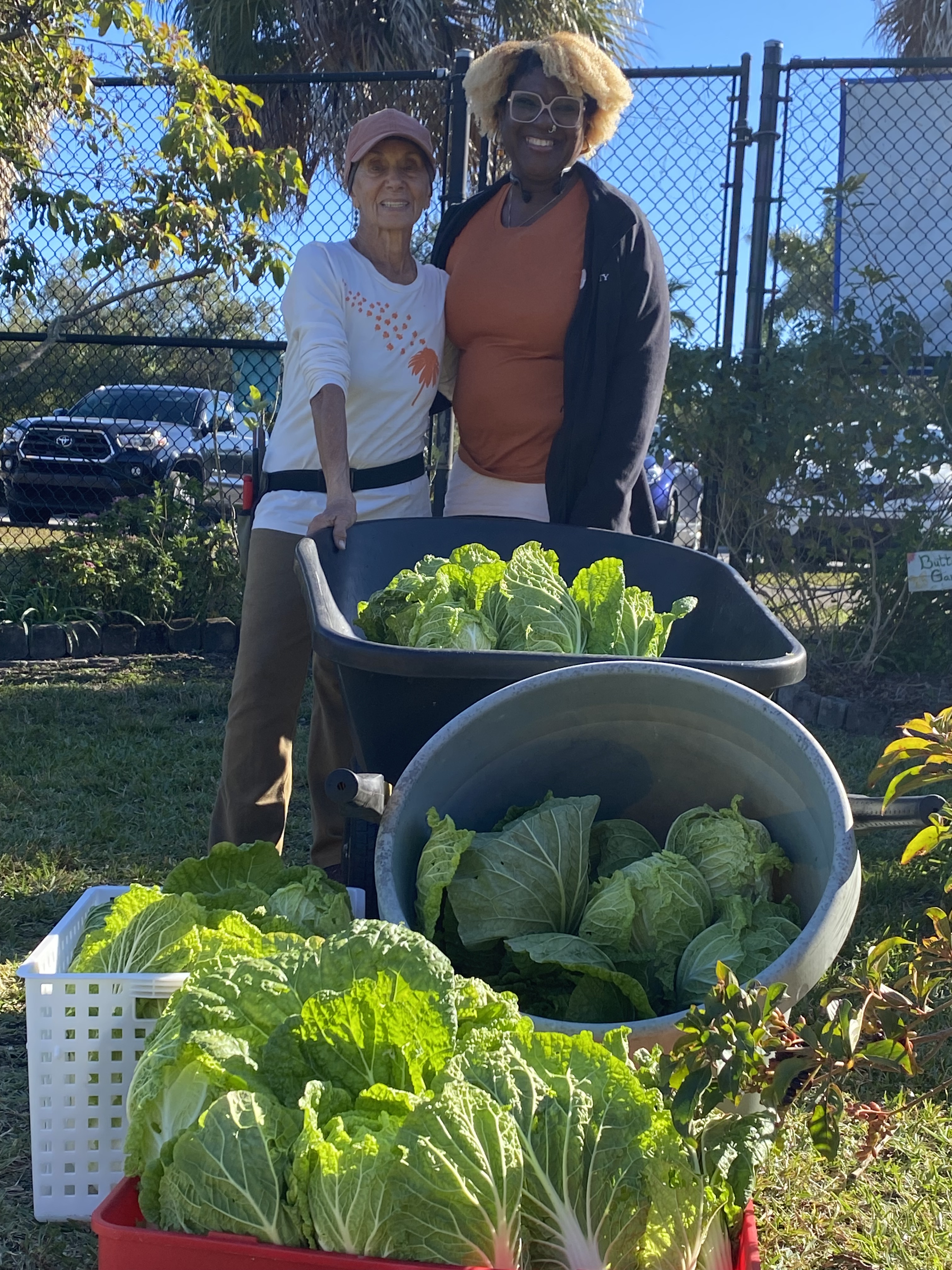
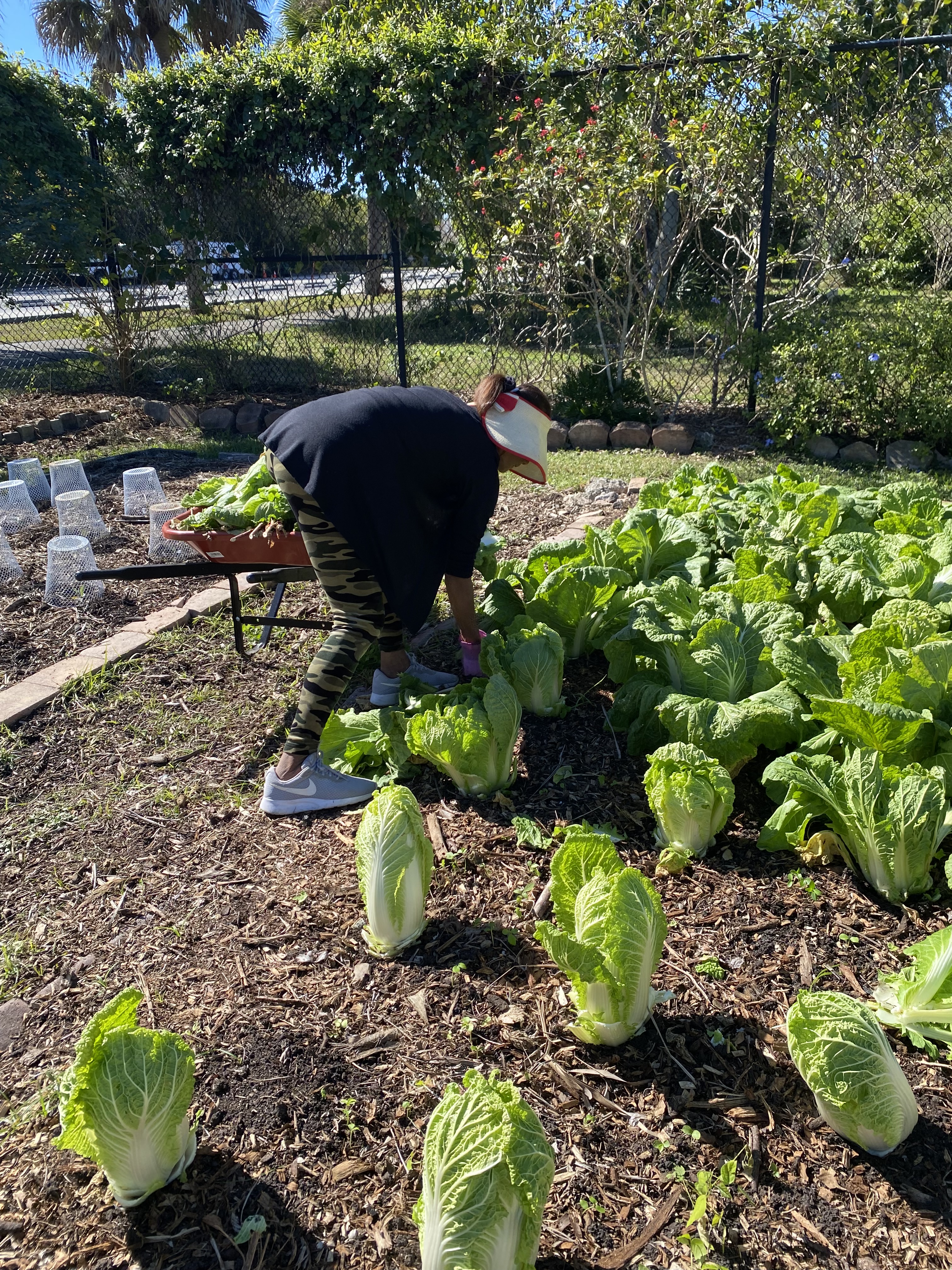
Just recently the garden acquired a scale to measure our donation output. On January 2nd Satya and volunteers harvested 29 heads of Chinese cabbage and 1 head of mustard greens for a total of 70 pounds of produce donated to the food pantry. Then on Thursday, Satya and Olivia harvested and weighed 32 heads of cabbage for a total of 94 pounds! This is a great service to the community and a labor of love from our gardeners! Thank you Satya for leading the way!