Harvest and Preserve Your Herbs

Most herbs are very easy to grow and they enrich our lives with their flowers, flavors and medicine. When harvesting herbs, you need to identify which part of the plant you need – the root, leaves, flowers or rhizome. Then you can decide when is the best time to harvest.

Herbs such as basil, thyme, mint and sage are best harvested when the flowers are about to open. That is when the oil content in the plant is at its peak. Flowering tops such as skullcap, golden rod, yarrow and hyssop are also best picked when the flowers are just about to open up.

The best time of day to pick flowers and leaves of herbs is in the morning after the dew has dried. Once harvested, be careful not to crush the fresh leaves or to leave them in the sun. You may use sharp scissors to cut at the base of the plant, and if the conditions are right, the plant will will regrow.

Drying Herbs

If your harvest is clean of bugs and dirt, there is no need to wash it. Pick through it to discard any discolored or damaged leaves or flowers. The point of drying is to eliminate the moisture in the plant quickly before it dies so it retains its properties when stored. You can dry them on a screen or some muslin cloth. Tie your herbs in loose bundles using rubber bands and hang them in an area that is warm, dry and shaded. They are dry when the leaves are crisp and snap rather than bend. It may take up to two weeks for some herbs to completely dry. Store in a clean glass jar rather than plastic. Label and date the plant. They do lose some of their potency over time.

Alternatives to Drying

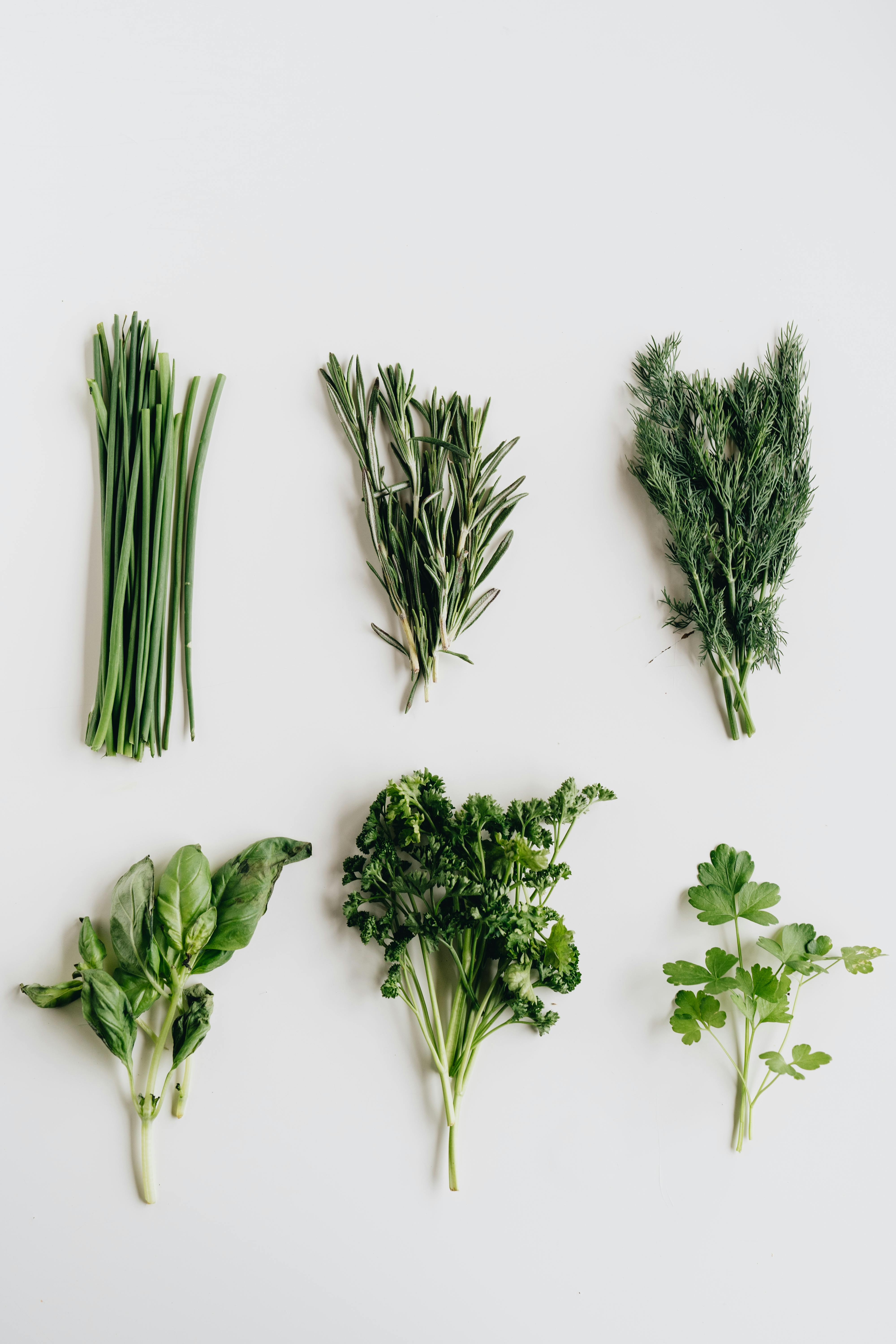
There are a few other ways to preserve your herbs. Freezing, making ice cube herbs and infusing oil or vinegar with your herbs. Some herbs, like basil, are at their best when used fresh, so freezing will help the leaves retain their flavor. See the uploaded document for the best ways to preserve some of the types of herbs.
Medicinal Garden

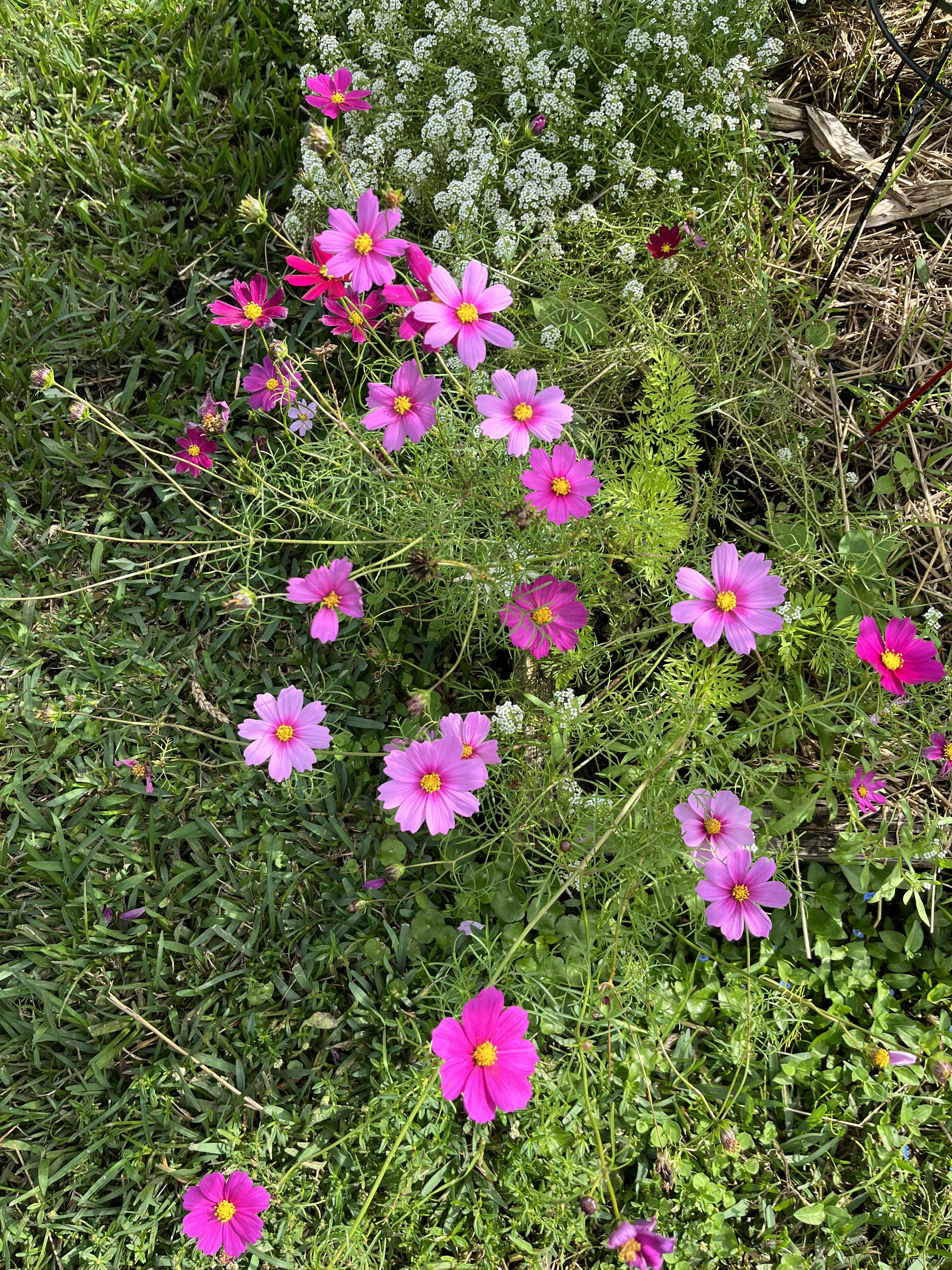
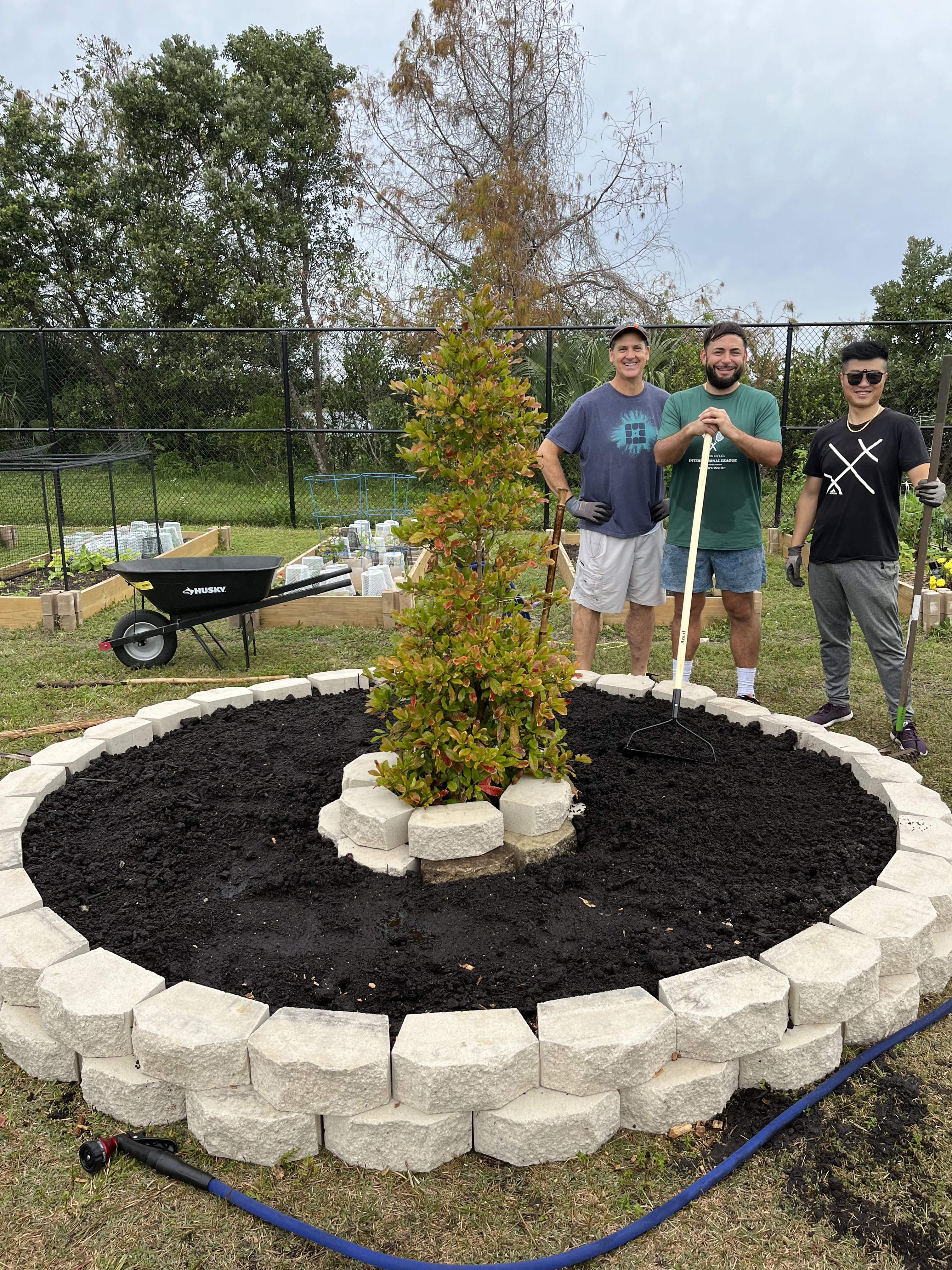
When the garden expanded last October, plans were made to create a medicinal section. People have used plants for thousands of years to treat mild ailments and support their general health. Below you will see photos of the garden’s first efforts to grow medicinal plants in our south Florida climate. At the center is a Miracle Fruit tree. When the berries of the tree are eaten, everything eaten afterwards tastes sweet, even lemons! Some of these medicinal plants may survive the summer weather, whereas others will be planted like annuals during our fall/winter/spring season. Included in this first planting are a variety of bee balms, holy basil, mugwort, motherwort, marshmallow, yarrow, stinging nettle and plantago. Future plantings will include chamomile, elecampane, feverfew and more! Most of these plants can be used to make teas and tinctures that support your body’s healing processes. Future classes at the community garden will include directions on how to make, store and use some medicinal plants.

Art in the Garden

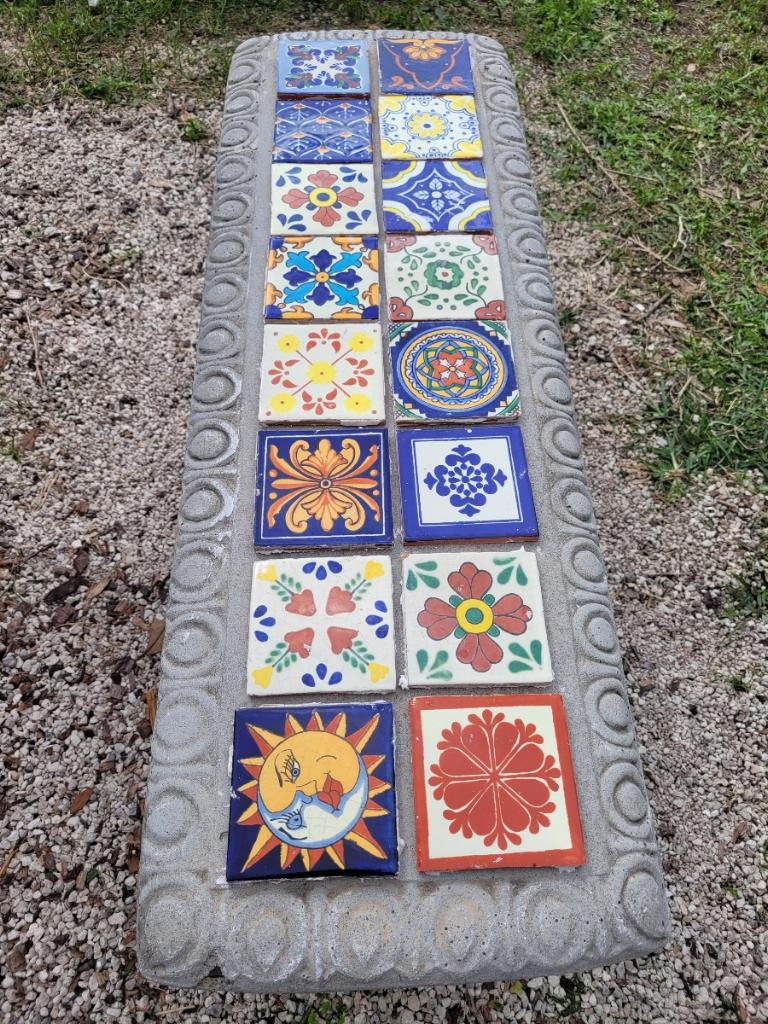
At the time of our pavilion dedication, Natasha, the daughter of one of our gardeners, gifted the garden with a beautiful mosaic. It sits by a bench near our entrance.

Gardeners were inspired by this beautiful art and discussed the idea of tiling a table and benches in the Memorial section of the garden. Natasha agreed, and a group signed up to help. Mexican tiles were chosen and the activity took a couple of days. The result is this colorful addition to the garden! Thanks to Natasha and all who participated! Be sure to check it out when you visit.

Volunteer Highlights

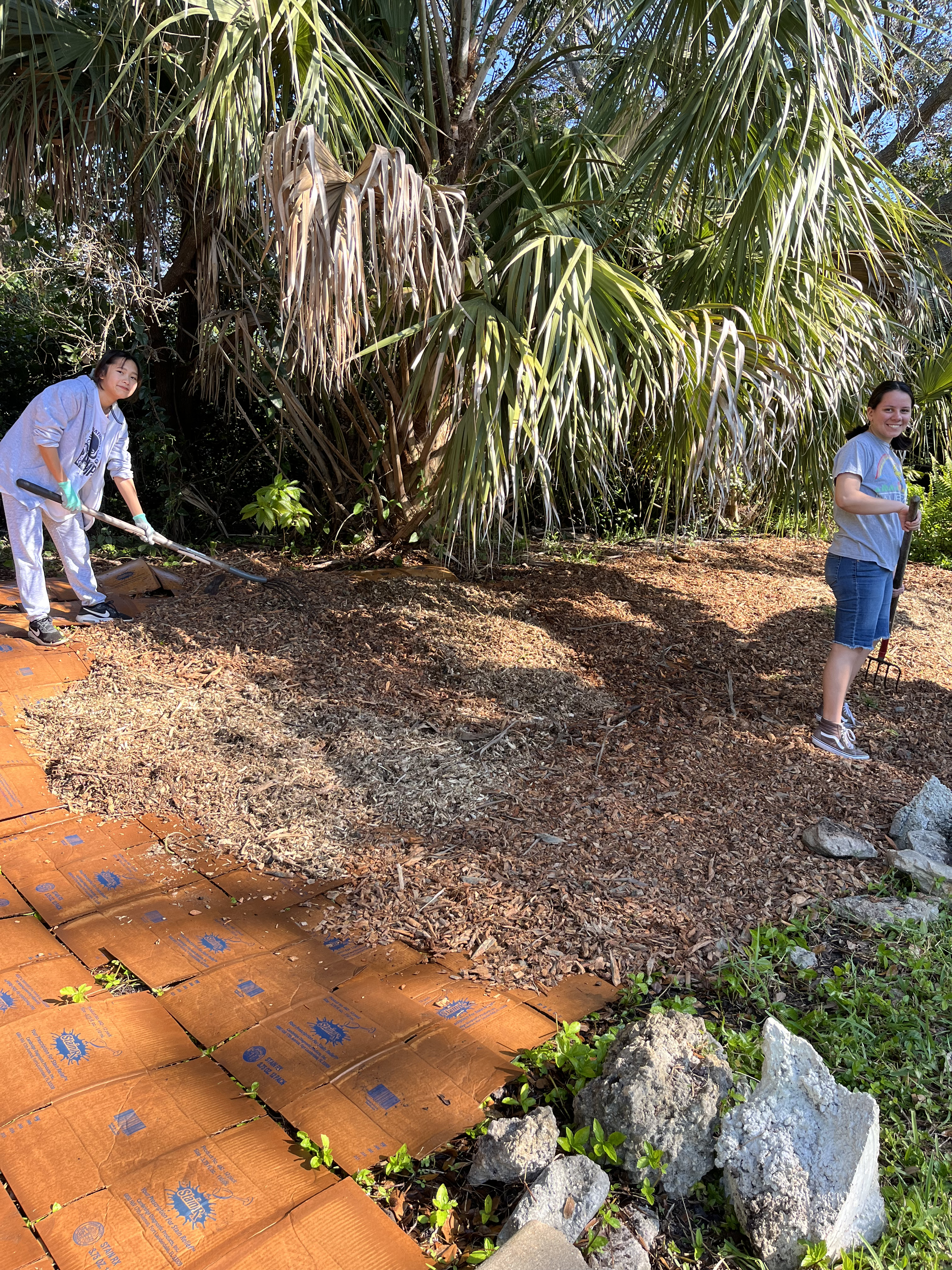
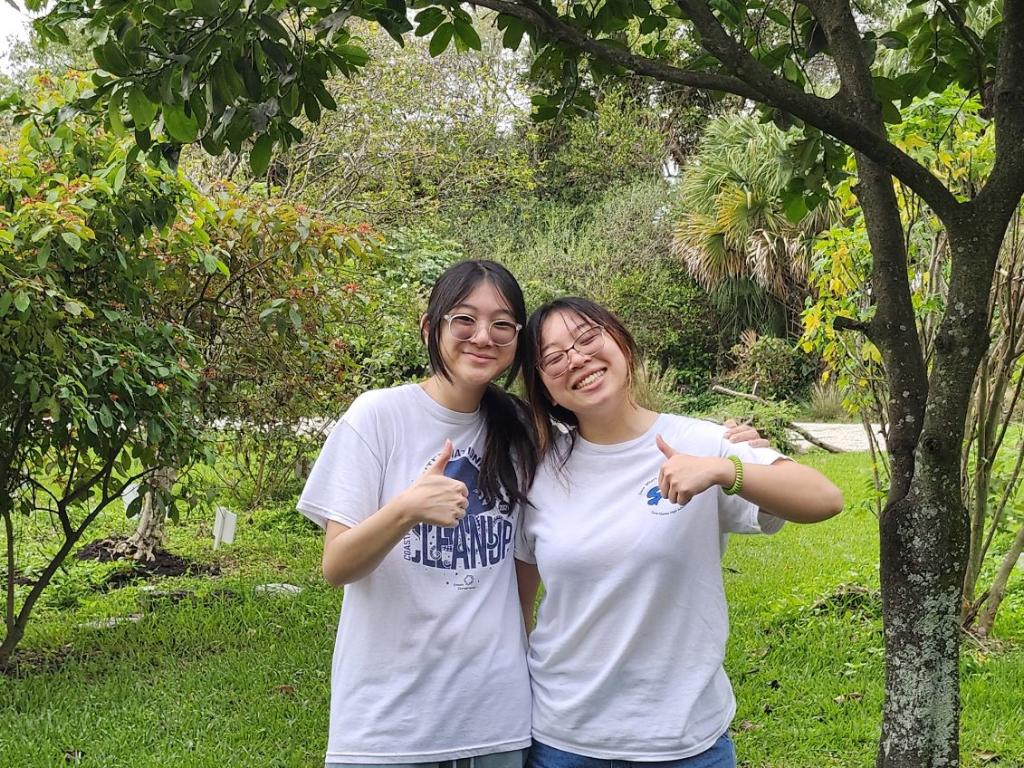
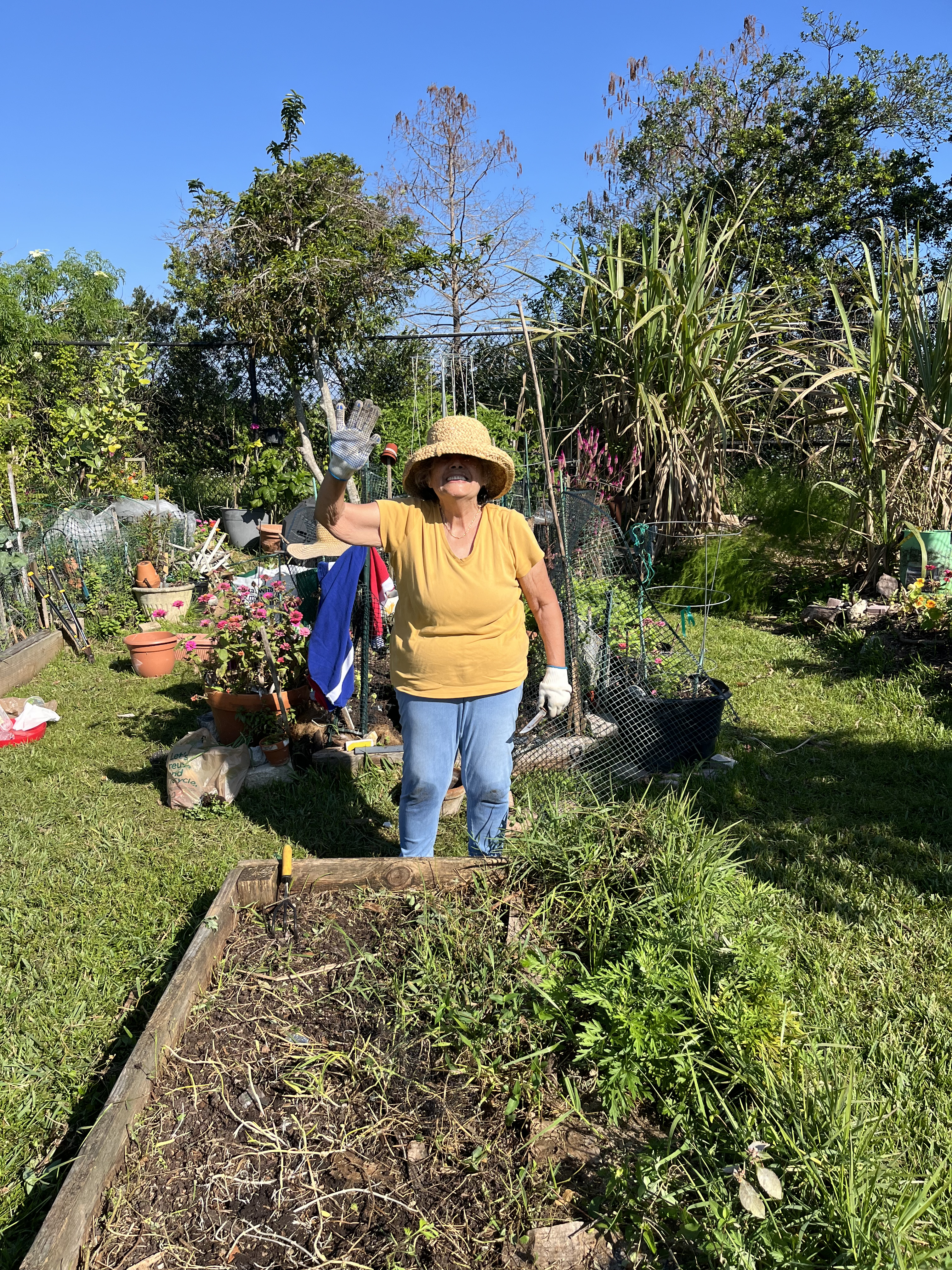
Beautiful weather and wonderful people make our garden a spectacular place to be on a Saturday morning! With the onset of the cooler weather, volunteers have completed many of our garden tasks while sharing gardening tips and enjoying snacks! Here are a few highlights from our January and February Volunteer Work Days:

Making Signs

Creating a Medicinal Garden

Great Teamwork Mulching in the Food Forest

Sifting Compost For the Garden

Weeding, Planting and Mulching

The Gardeners are at it again!

Main photo
On a scorching August day, the Coral Springs Community Garden saw its best players come out and prep the area for another fruitful season. Everyone was amazed at the amount of growth we encountered—the hot rainy summers in Florida are like that! A lot of the plots were choked with weeds, and we needed Lee to scorch the overrun gravel path; that’s the cool way we keep things out here looking so good!

Lee does a lot for the garden—he’s the one that transports tons of our produce to a local food pantry
Lee does a lot. He’s the one who transports tons of our produce to a local food pantry
.
There was a lot to tackle last Sunday. The world’s tallest okra plant was surrounded by out of control Morning Glory that saw a lot of us poking through it with a pitch fork, hoping to find some sweet potatoes. Were any recovered?
Come and see the world’s largest okra plant…well, biggest in Broward maybe!

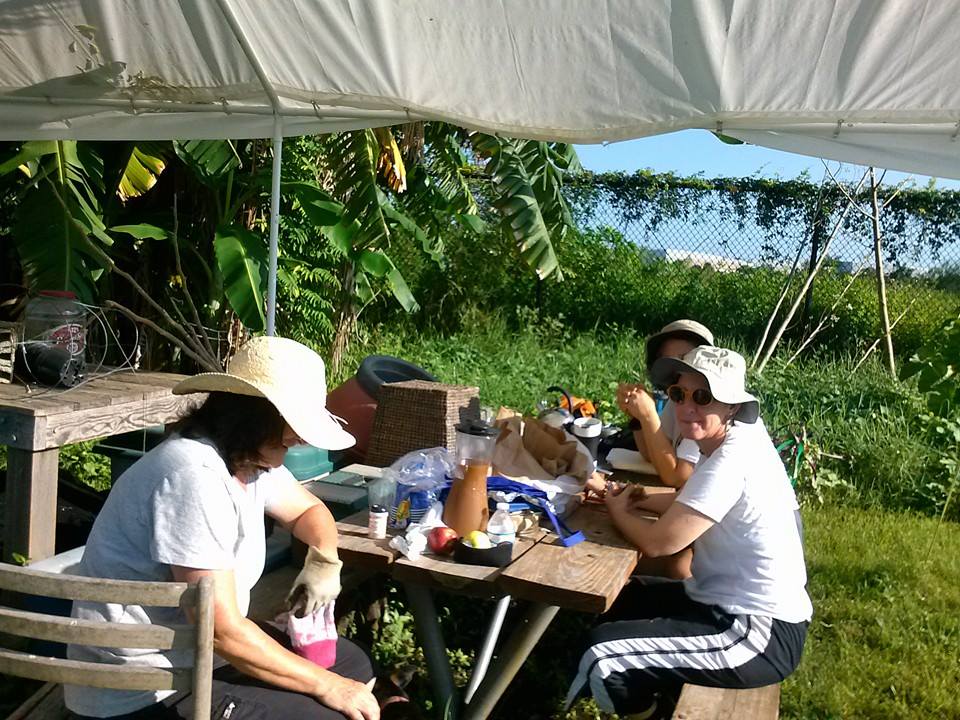
We got busy weeding, but we also had time to take to the shade and enjoy some of the provisions. Jackie Ida brought fresh fruit and tons of ice cold water. Jen Russon brought blueberry cake and a carafe of strong iced coffee—others brought donuts and homemade snacks wrapped in foil. Word to the wise: foil is the way to go out in the elements; it’ll save your food from ants!

Download the 2014/2015 Plot Agreement!
But let’s get to the heart of this blog: which serves to remind that the gardening season here in the tropics unofficially starts NOW and resumes full swing in October. We usually don’t put our crops to bed until May. The 2014/2015 Plot Agreement is now available online, so go ahead and fill it out, whether you’re renewing or simply “new”! Judith Gulko, one of the garden organizers, says that technically the garden is full but you never know who’s renewing and who’s not, so do send in your forms and small annual fee for the year!

Judy: “There’s a good chance lots of plots will be available.”

You’ll notice in this photograph that Judy is wearing a Garden Club shirt—these are for sale! Proceeds go to making this place bigger and better, so be sure to check out all the wares: shirts, cups and totes were all designed by Margarita Lartitegui-Mata, pictured below with her creations. She says the price of these items has yet to be determined, and to please get in touch with her directly if you are interested!
tote
And speaking of work, everyone in the garden is looking forward to meeting some pretty big goals—like turning the adjacent field into a food forest for the public to enjoy. One of our gardeners—you can see her by liking her page on Facebook, is hoping to turn one of the huge plots into Cub Scout Pack 497’s vegetable garden, the fruits of which will all be donated. The cubs are looking forward to meeting the experienced gardeners and getting an earful on how to do their plot up right.
Good things are growing here this year—so come out, roll up your sleeves and start bringing in the harvest. Cheers!

Confessions of a Lapsed Community Gardener

By Jen Russon

A photo of the author in 2011
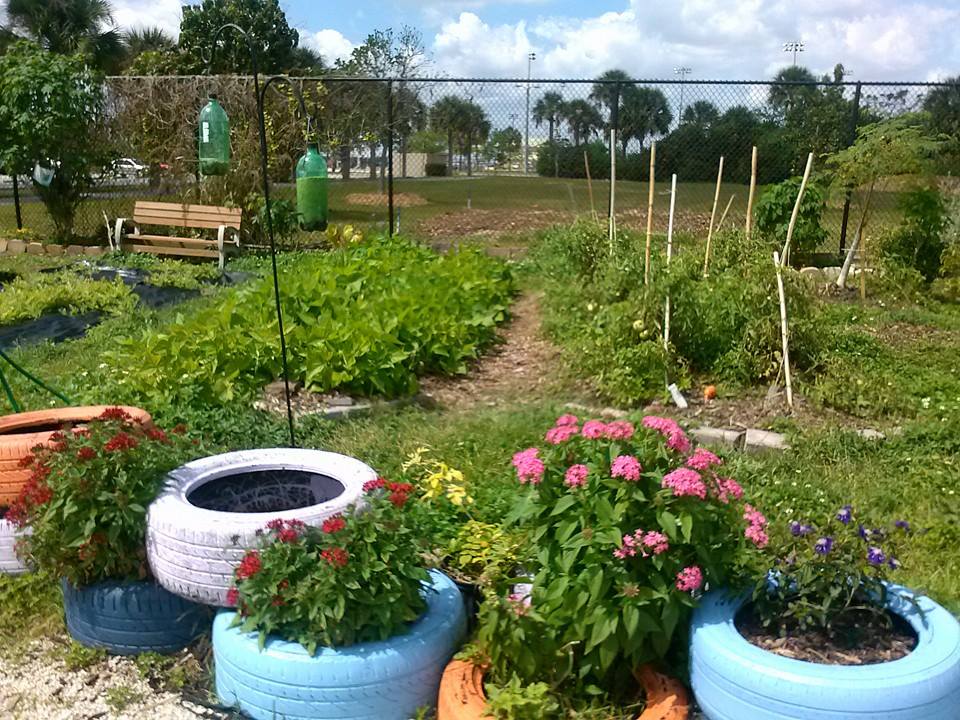
On the first day of spring, I revisited the community garden and was overcome with (yes, it’s corny) a sense of how much it had blossomed and grown since my last volunteer day over a year ago. (a year ago…and I do feel bad!) I hadn’t remembered so many butterflies hovering around on my last visit; hadn’t recalled the nice bench and billowy white canopy, or the pastel painted tires that hold such bright flowers. The first thing you’ll be struck by if you’ve been an inconstant gardener like me is how hard everyone has been working.
everything photo

It used to be you’d come here and see mere sections that showed dedication and know-how—now the whole area, which is sizeable, looks well loved. Right now, Monarch butterflies are laying their eggs in the landscaping that butts up against the garden gates, a project I remember helping with. The smell of chamomile, roses and lemongrass mingle with the hot March breeze—intoxicating enough to make you forget there’s a dog park around the corner.
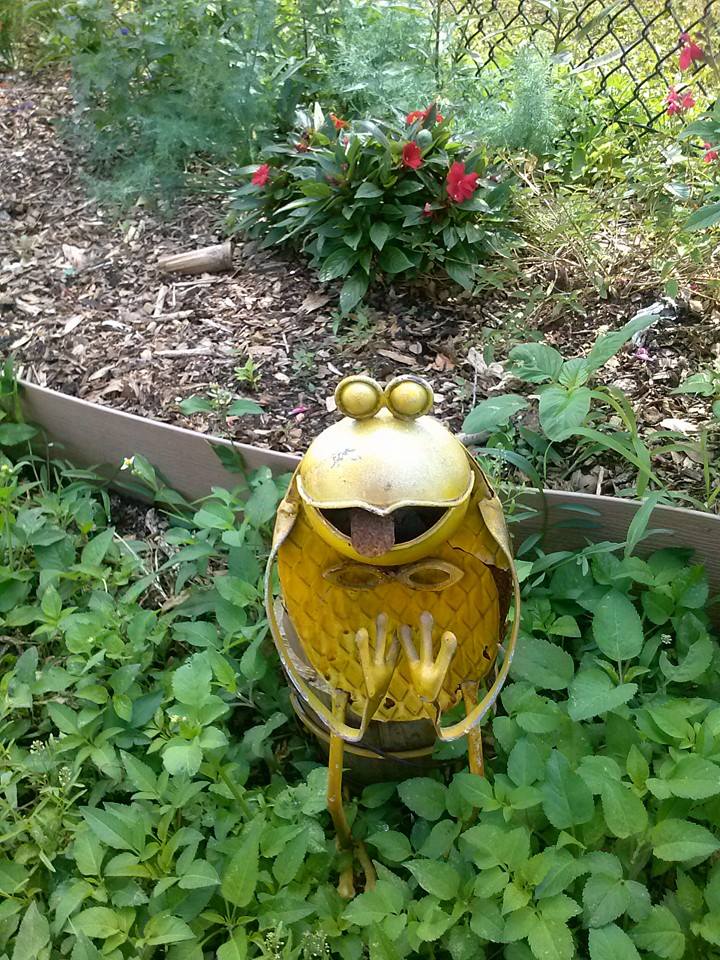
frog

There are personal touches everywhere from small to grand, from clever birdfeeders made of plastic soda bottles to a wide and curving gravel path, paved by the Boy Scouts of America. The abridged version of all this poetic jibber-jabber is that this community garden is something just about everyone, upon entering, wants to be a part of.
path
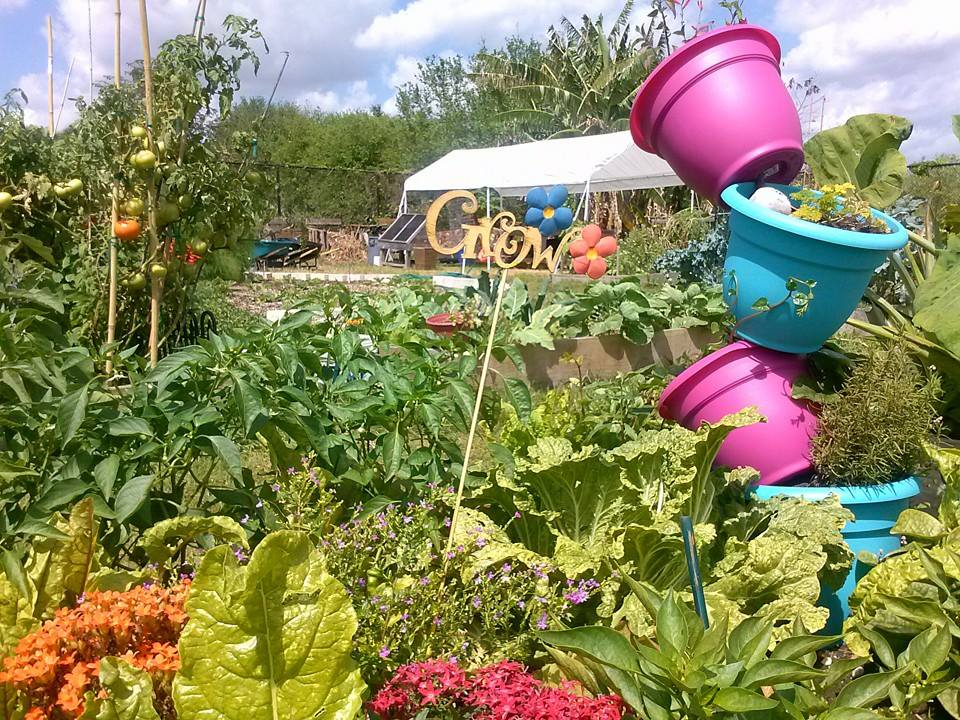
What a long way this place had come! Circa 2011, most of the plots were a tangle of dirt and roots—maybe a sweet potato or two if you were lucky. The sign posted on the chain link fence advertised: “Garden Plots Available!”, and for around $39 per year I secured plot #8—I harvested a few handfuls of green beans, lots of lettuce, green onions and a few tomatoes, but certainly, I could do better. I could be inspired by what’s here now: shiny black, low hanging eggplants, big as a size 10 pair of Crocs, jicama, bright green chili peppers, enough kale for everyone standing on line at the Jamba Juice to have an energy drink; cabbage roses, REAL roses—and maybe it would look good enough to put my own personal stamp on it. Pictured here, are some of the more personalized plots, maintained by people who obviously know what they are doing.

A garden plot to literally "crow" about!
A garden plot to literally “crow” about!

While I toured and snapped photos, Satya—a seriously committed member who has been known to lead yoga classes on garden grounds—watered her plots and offered me a crisp green bean.
satya
She gave me the scoop on all the old (and new) faces around here, and mentioned that Lee ought to harvest his beans soon, and get them over to the food charity that the garden has donated hundreds of pounds of fresh produce to over the years.

Anyway, as I thought about all that good will, snapped my photos, and shadows of butterfly wings hovered around my silhouette, I’ll admit to feeling heavy hearted and sheepish, not renewing my plot for 2013/2014. In 2012 I’d paid the annual dues, but handed over my plot to the care of Satya. She’d done an excellent job—but we both knew it was a slippery slope to my not renewing. I had reasoned that it’s too far to drive and my green thumb too non-existent. In truth the garden is around 5 miles away, and I’m as good as any gardener when I try. This sudden shift in my confidence level was something that I at first blamed on sun exposure (unseasonably warm that day in the garden!), but now that I’m writing this in my office, cool drink in hand and still missing my plot, I may just have to give Judith Gulko a call…Do you have the papers for me to sign, Judi? Am I too late?