
April Workday
Rotary Community Garden and Food Forest of Coral Springs
Communication Forum for the Community Garden

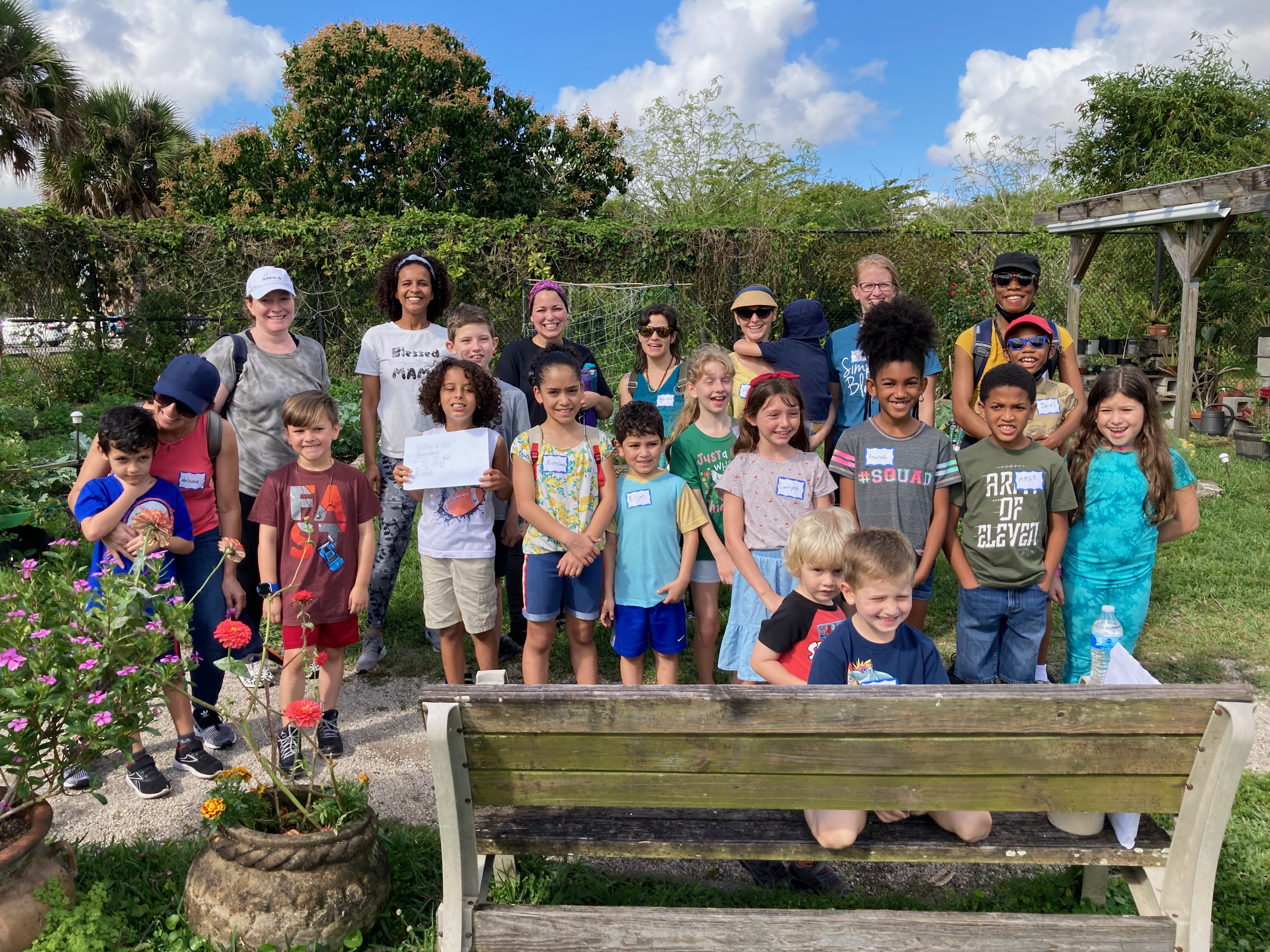
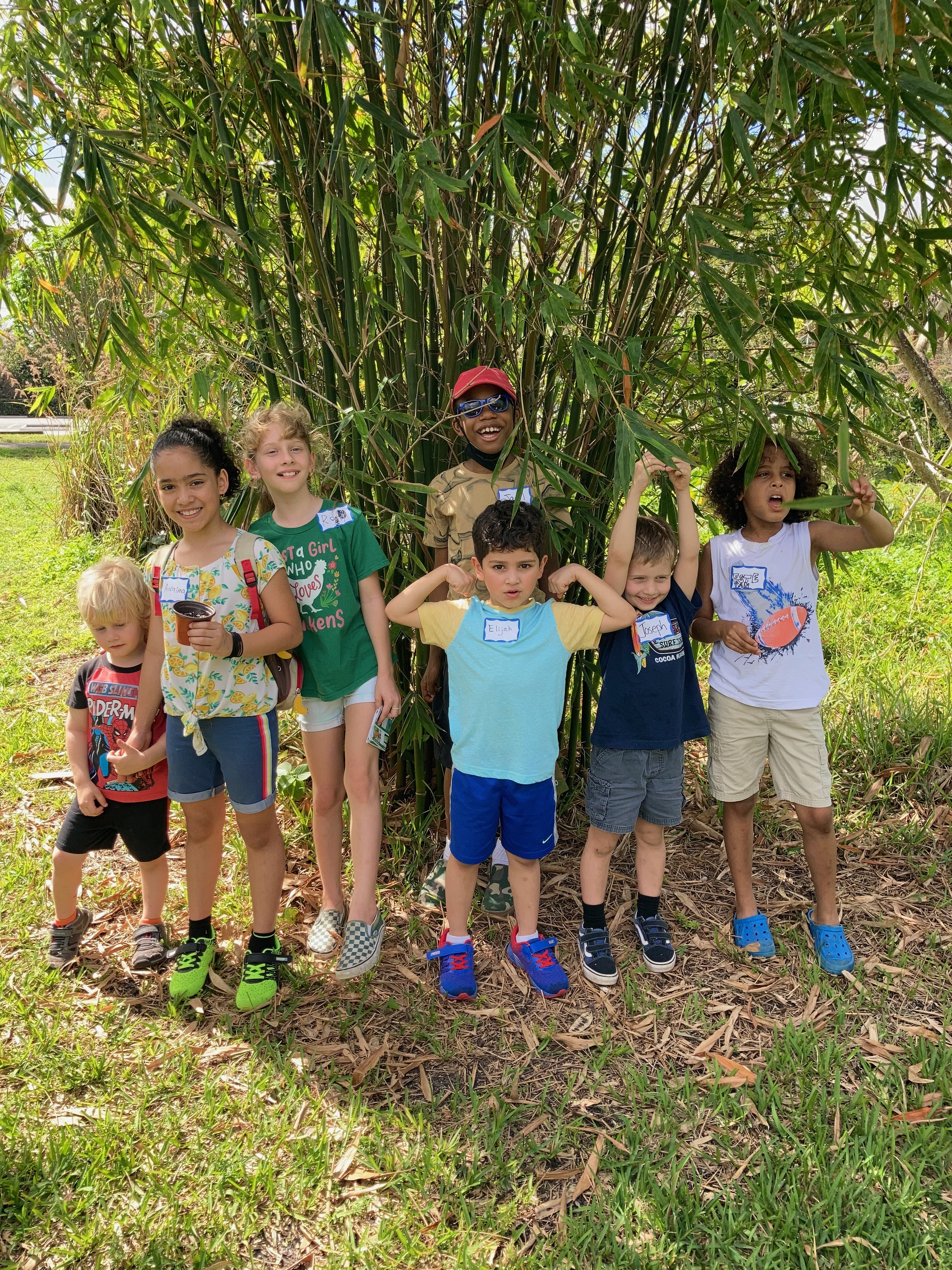
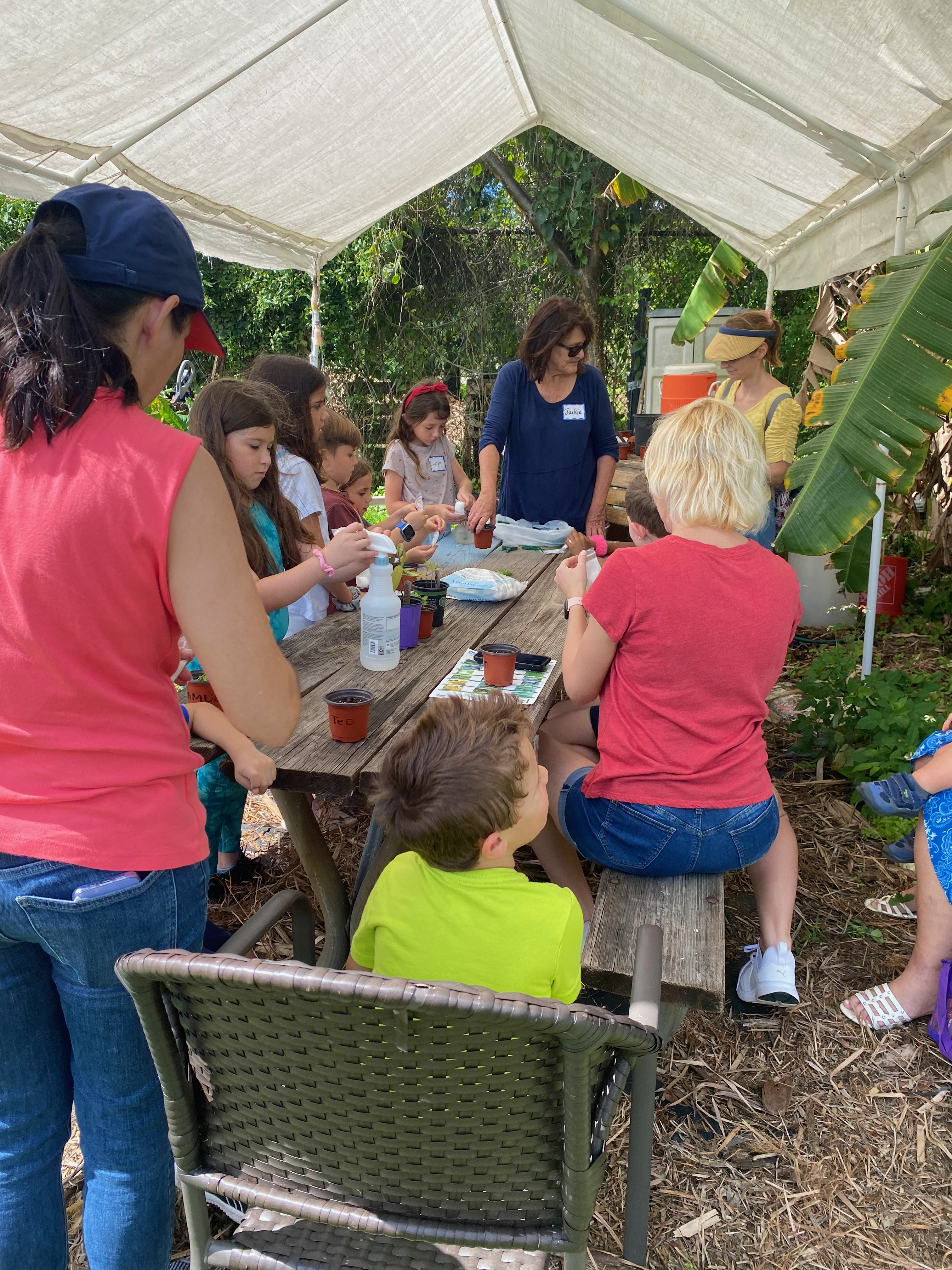
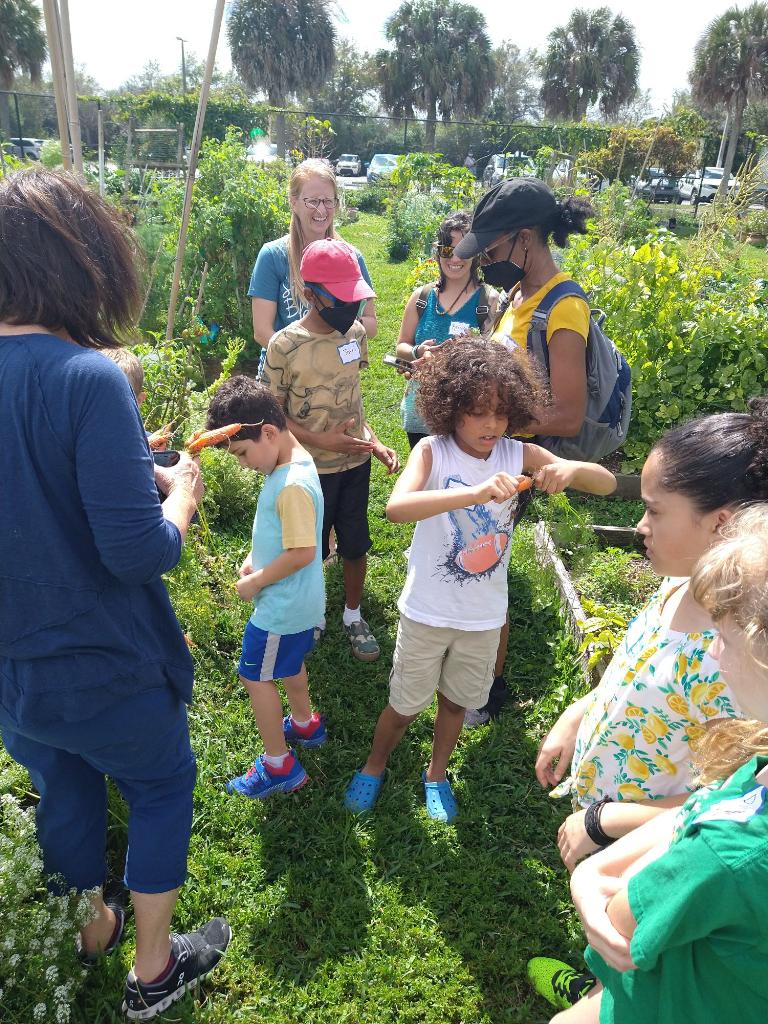
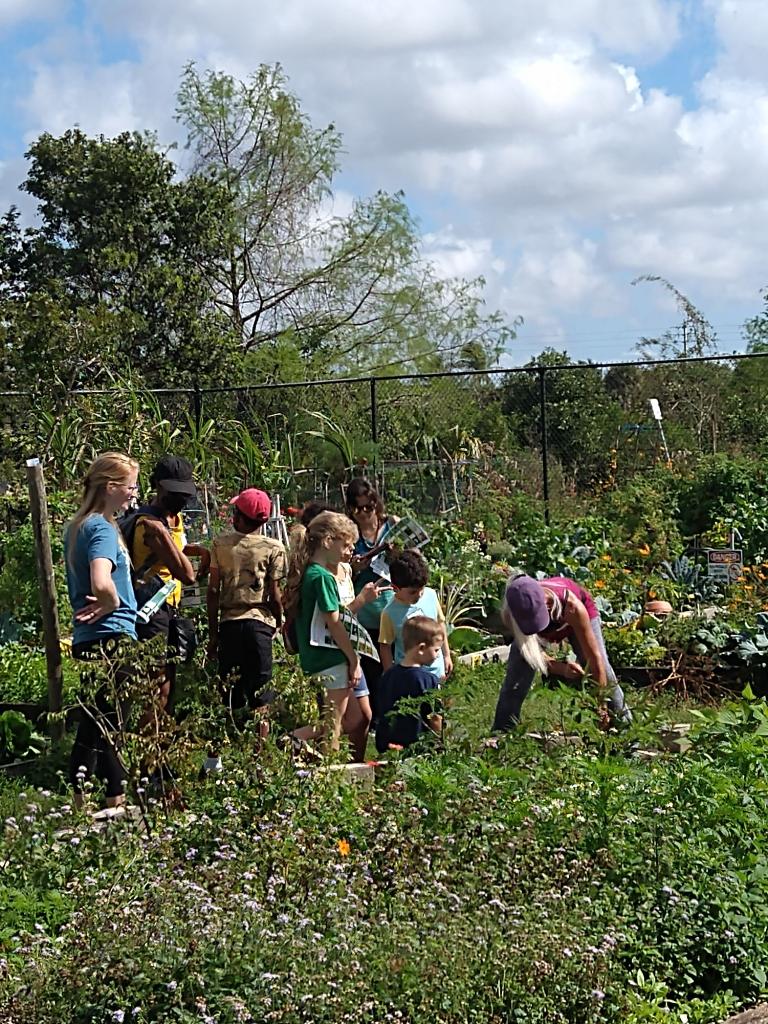
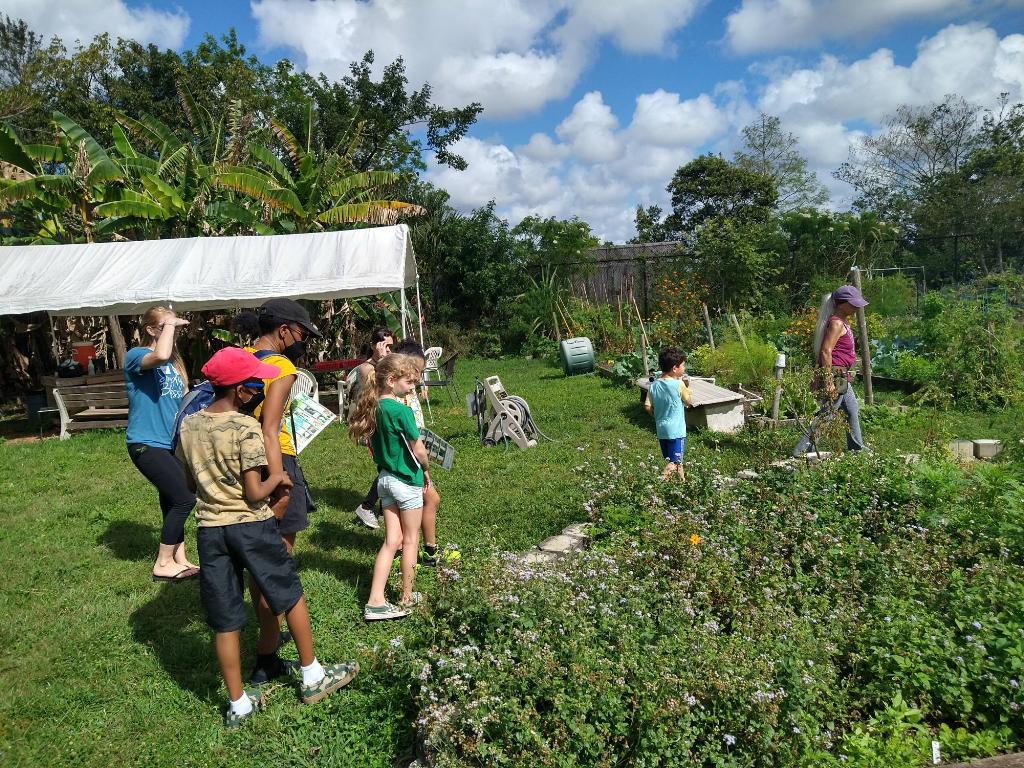
On a sunny day last week the garden was visited by a delightful group of 15 home school students and their chaperones. They were given tours of the Food
Forest and vegetable garden by Jackie Ida where they learned about the importance of good soil management, composting and companion planting. The children sampled cherry tomatoes and carrots, engaged their senses by smelling fragrant flowers, herbs and touching smooth leaves.
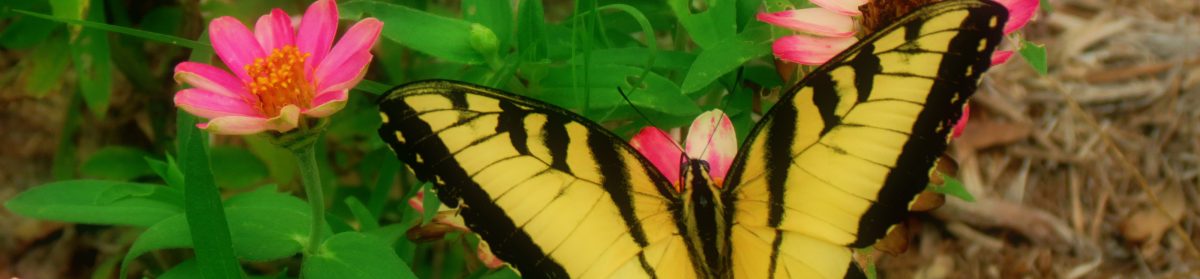
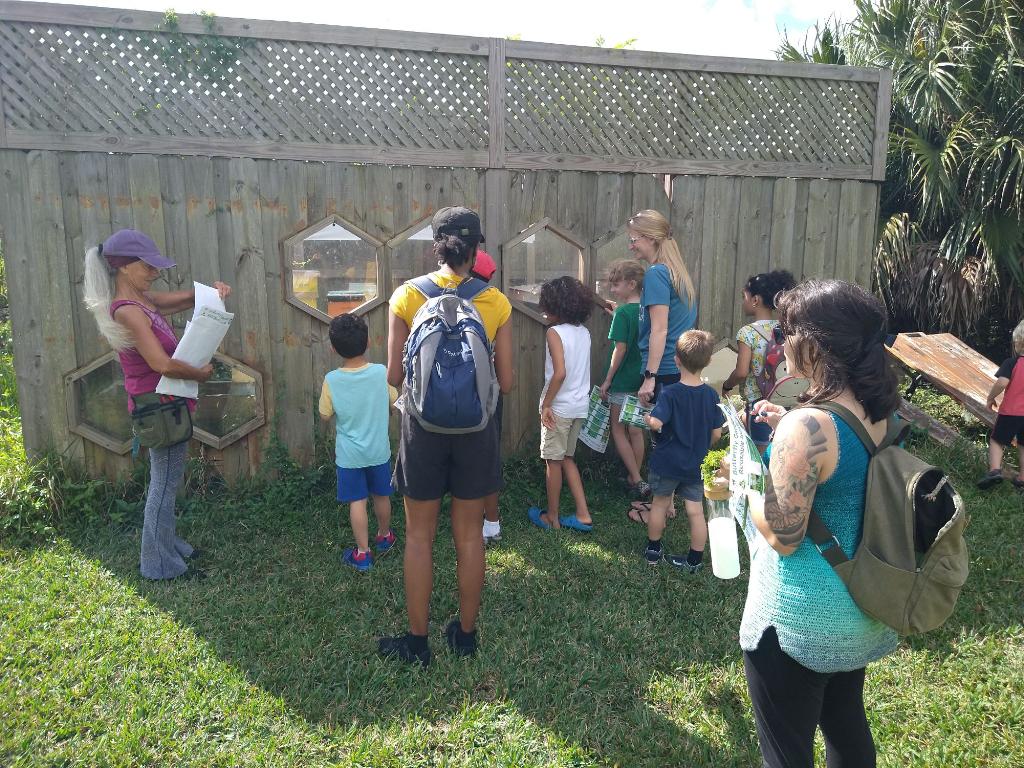
Satya Rudin walked the children through the the section of the garden dedicated to pollinators – butterflies and bees. The students saw monarch caterpillars on milk weed, atala caterpillars on coontie and observed bees in the apiary. They learned about the importance of pollinators in a garden. Each child was given a butterfly identification guide to take home.
After the tours, the students were so happy to plant a milkweed seed in a pot to take home. They also made a radish seed necklace to see understand how germination takes place when a seed has warmth and water.
Everyone enjoyed the visit to the garden. It was the perfect way to spend a beautiful spring day!

The summer months in South Florida are hot and rainy, making it uncomfortable to garden. That is why many of our gardeners use this time to build up the soil in their garden beds by planting green manures or other plants that hinder the spread of weeds. The Garden Committee has some suggestions for planting in the summer months.
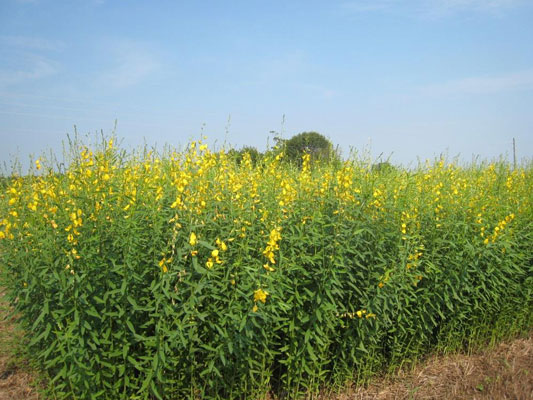
1 – Sunn Hemp
Sunn hemp is a tropical plant primarily grown as a cover crop or green manure. Originally from India, it’s easy to understand what makes it so popular among vegetable farmers in the United States. Sunn hemp possesses many soil-building traits, including high rates of biomass production. It is not only resistant to plant root nematodes but actively suppresses them. In as little as 60 to 90 days it can produce 120 pounds of nitrogen per acre and can suppress weeds up to 90 percent.Sunn Hemp is adapted to a wide variety of soil and environmental conditions, thriving through hot, dry summers and continuing to grow until the first frost.
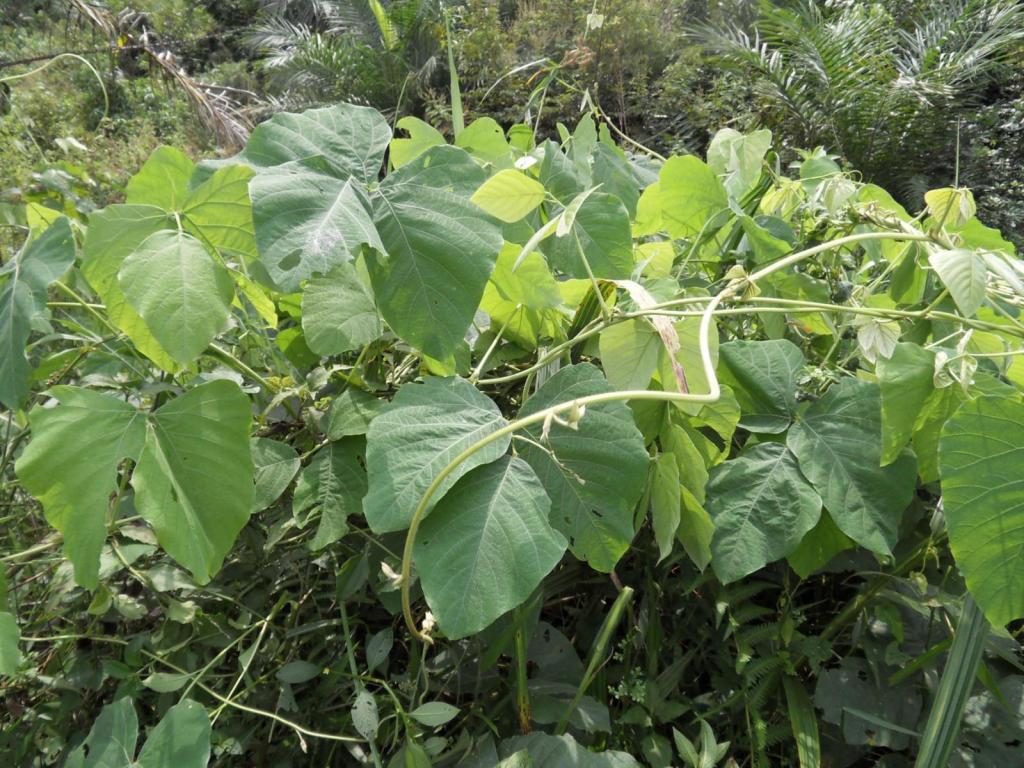
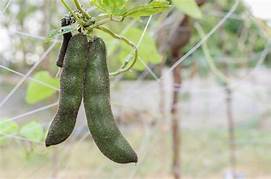
2 – Black Velvet Beans
These beans are known for their nitrogen fixing properties as a benefit to the soil and also as feed for cattle. In Northwest Florida, black velvet beans are grown along with corn and allowed to grow up the cornstalks! These plants will help your soil and keep weeds out of your garden box.
3 – Buckwheat
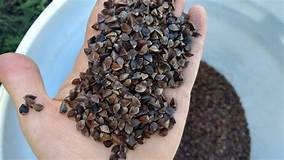
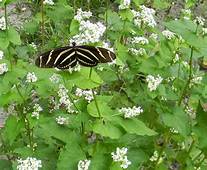
Buckwheat is an ideal cover crop – it attracts bees and adds nitrogen and phosphorus to the soil. It grows quickly and 2 or three crops can be grown in one summer. The hollow stalks make it easy to pull up and integrate into the soil. Buckwheat adds biomass to the soil and organic matter needed for the soil web.
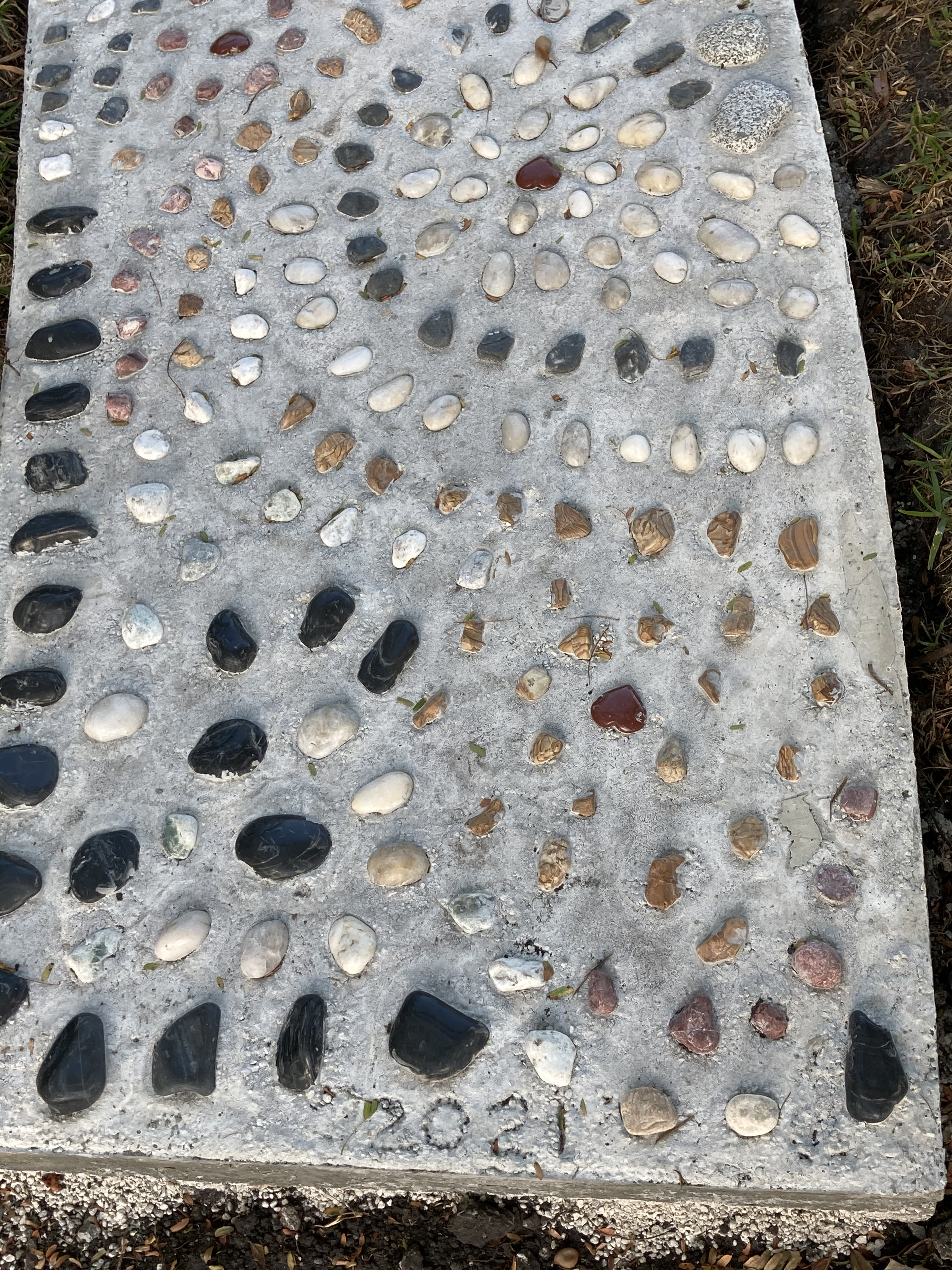
Some call it “Foot Chi.” Reflexology paths massage and stimulate acupressure points in the soles of the feet connected to various energy meridians of the body. Stone paths have been used for health benefits and are an important part of a healing garden. Our stone path in the Food Forest is in progress and looks great!

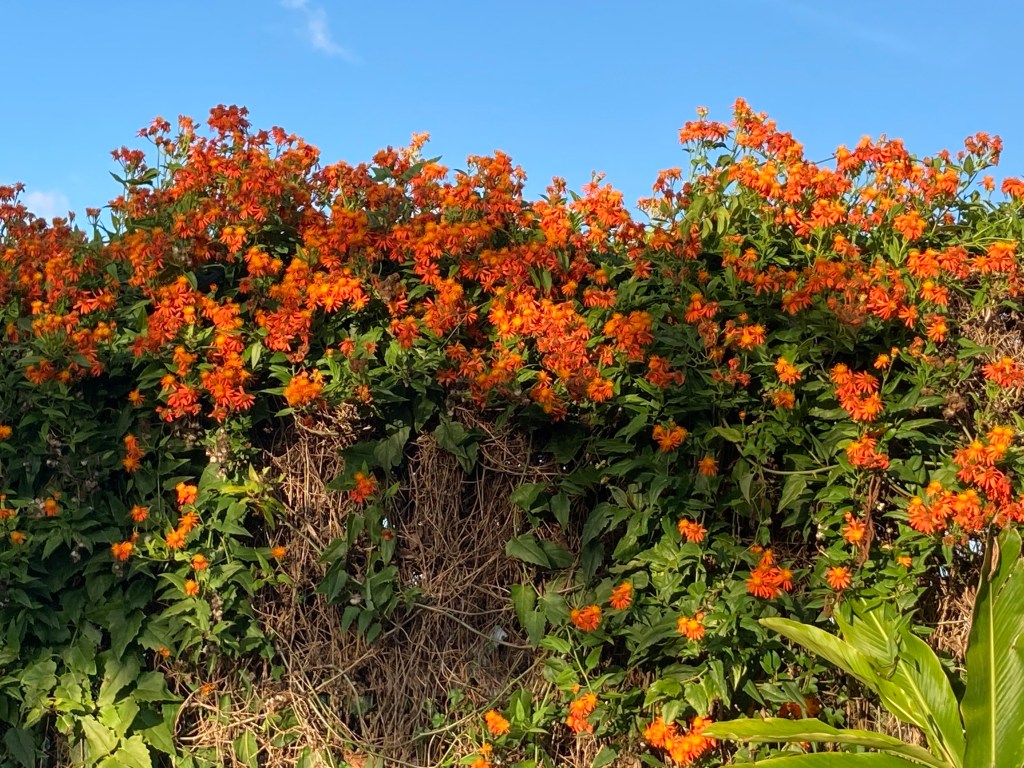
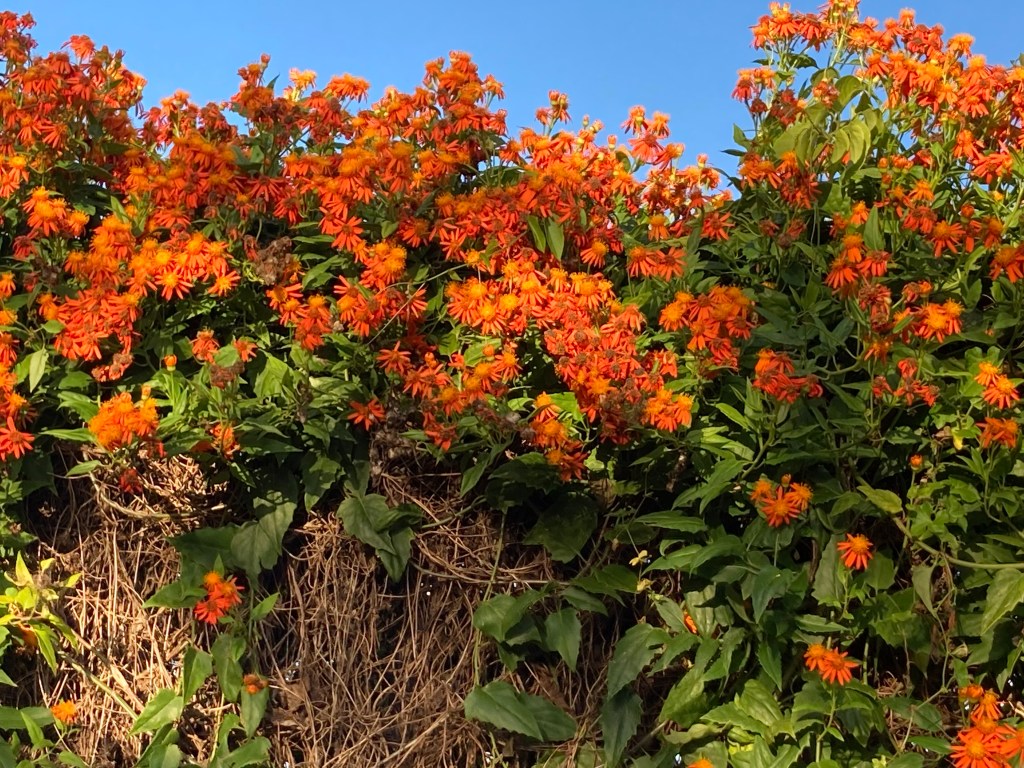
Flame Vine is a perennial evergreen vine found in many parts of Florida. It will grow very quickly during the summer months. It’s stunning tubular flowers are attractive to hummingbirds and butterflies and bring lots of color to the garden. This vine will grow up any sturdy fence and will spread. It does need trimming every year to remove dead woody branches. Even though it produces seed pods, it is propagated through layering suckers. Although non native, it is not considered dangerous by the Florida Dept of Agriculture.
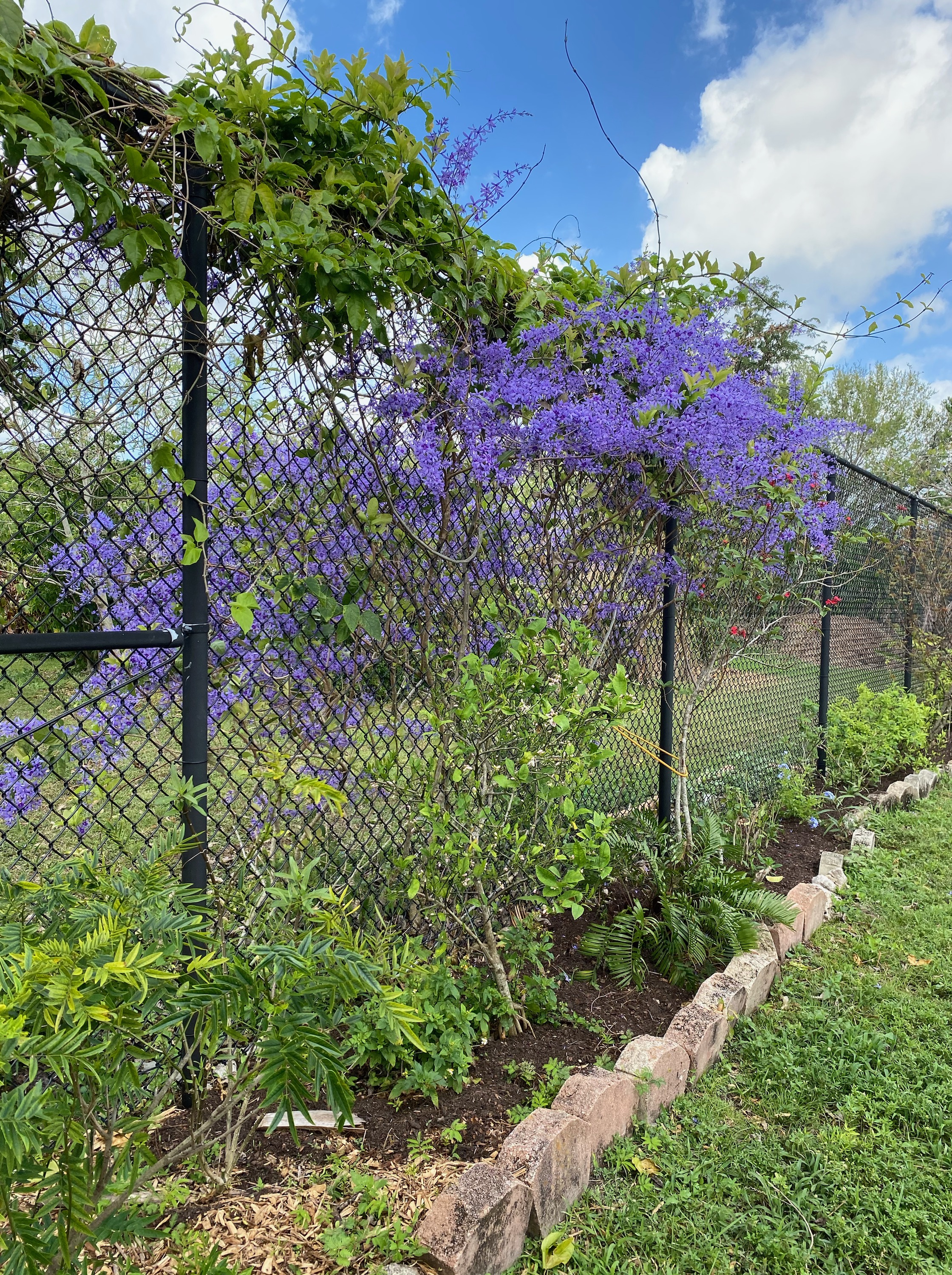
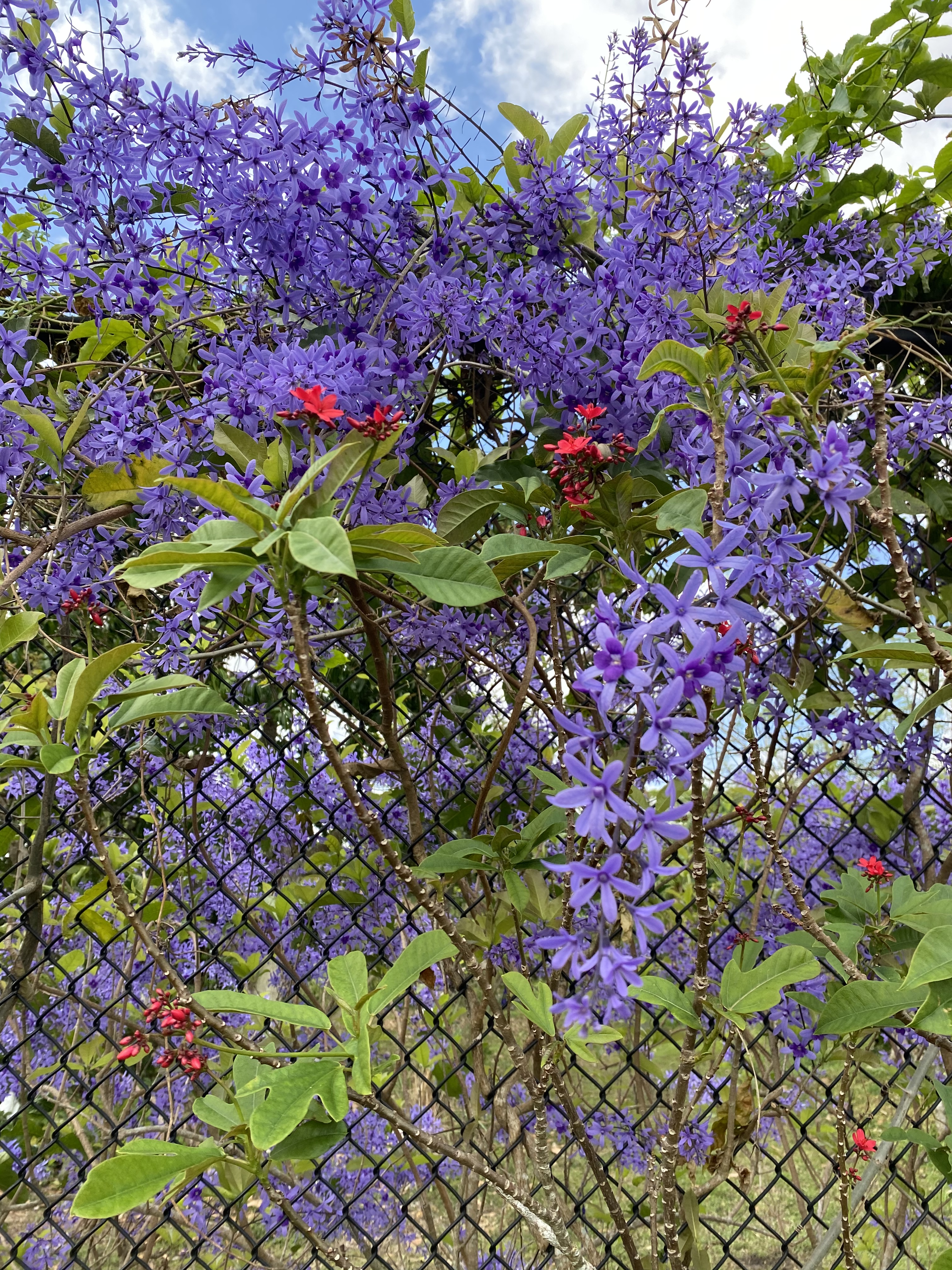
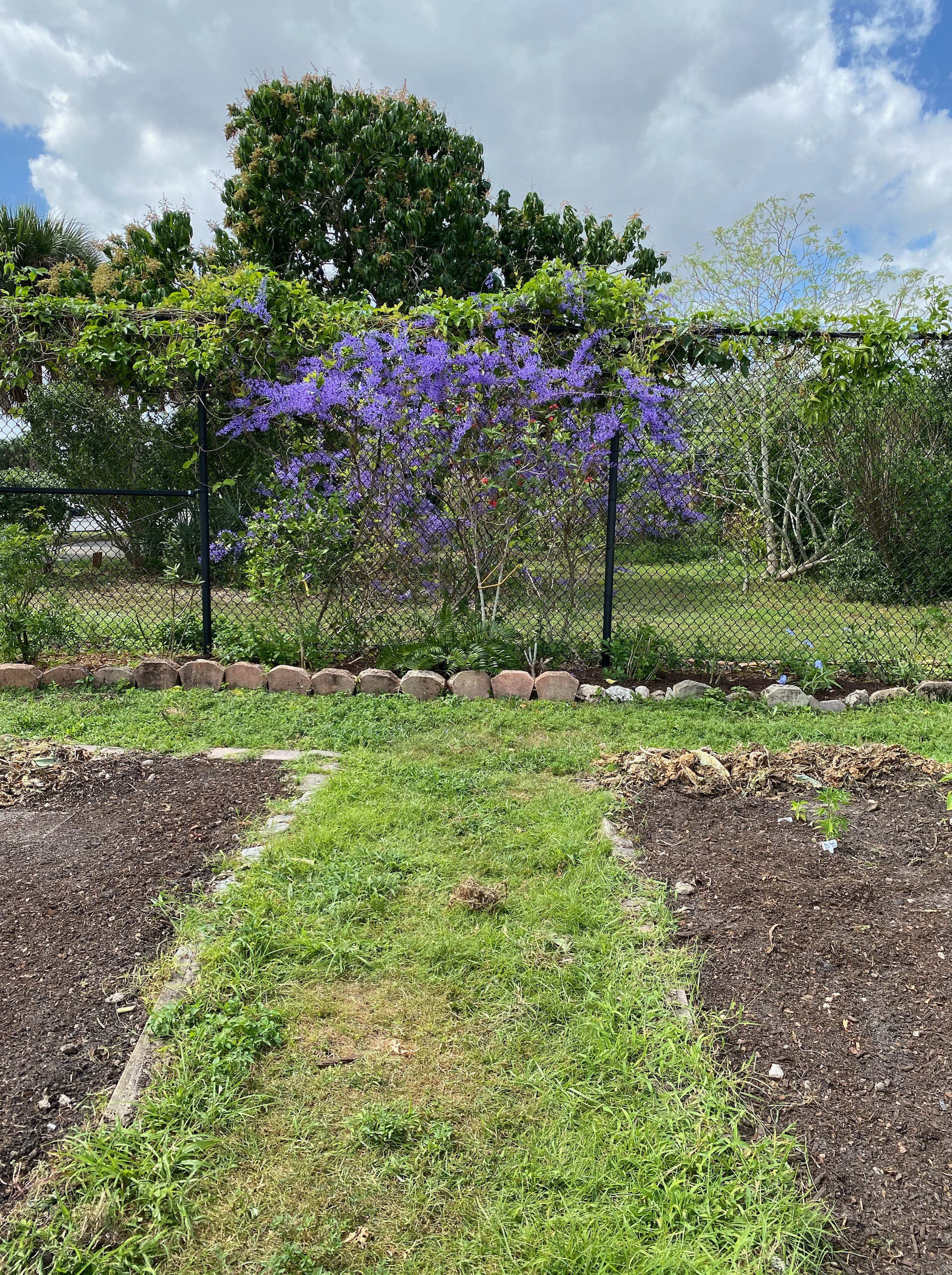
On the western side of the garden fence the spectacular Queen’s Wreath (Petrea volubilis) is in colorful display. It blooms multiple times a year, but mostly between February and June. It is a tropical vine that resembles wisteria with its small lavender flowers. Unattended it can grow to 40 feet but is easy to maintain as as a bush. It grows from Zone 9B to parts of South America and can be found in Cuba, Puerto Rica and Hispaniola. The Community Garden is in the perfect climate for Queen’s Wreath. Visitors were seen recently taking photos – the color of the flowers stands out among the other plants. These photos were taken by Satya Rudin.
 Rotary Community Garden and Food Forest of Coral Springs