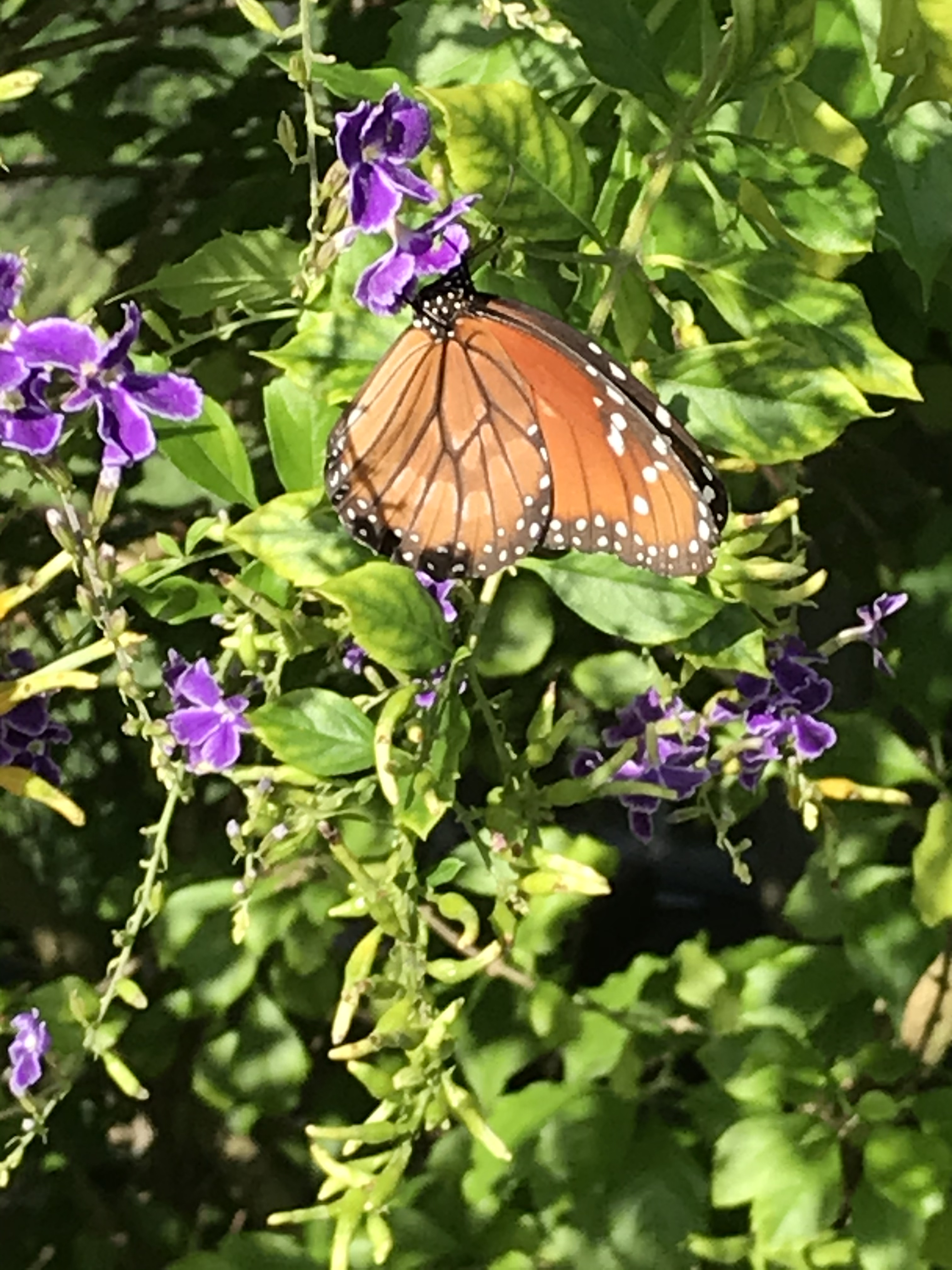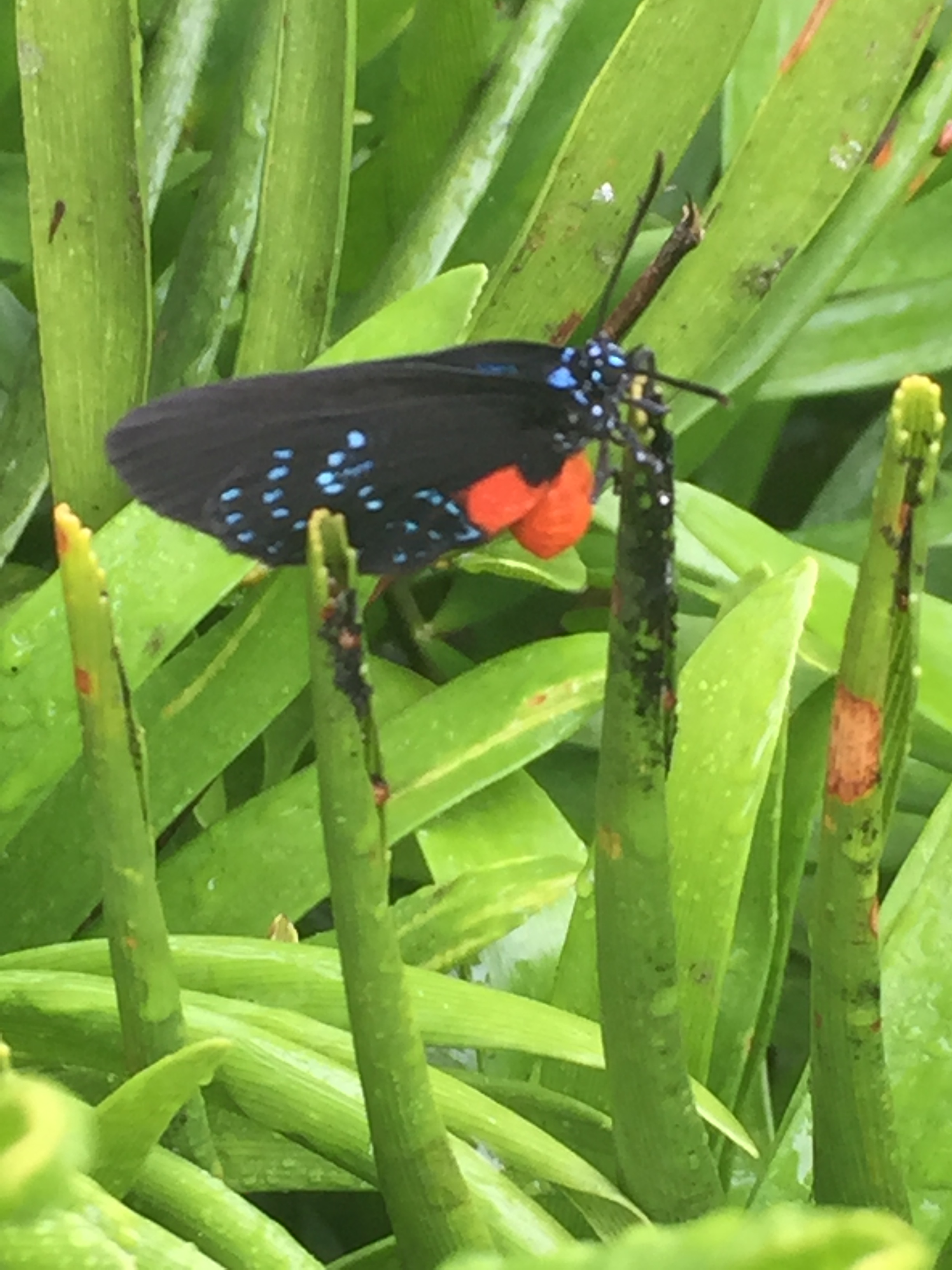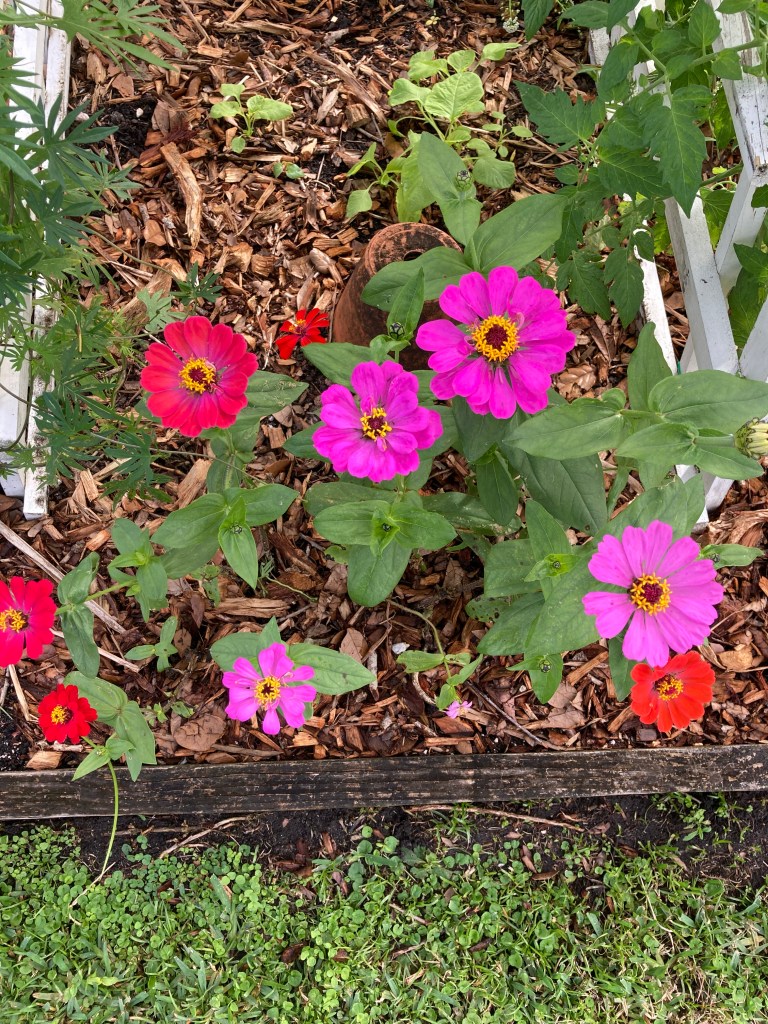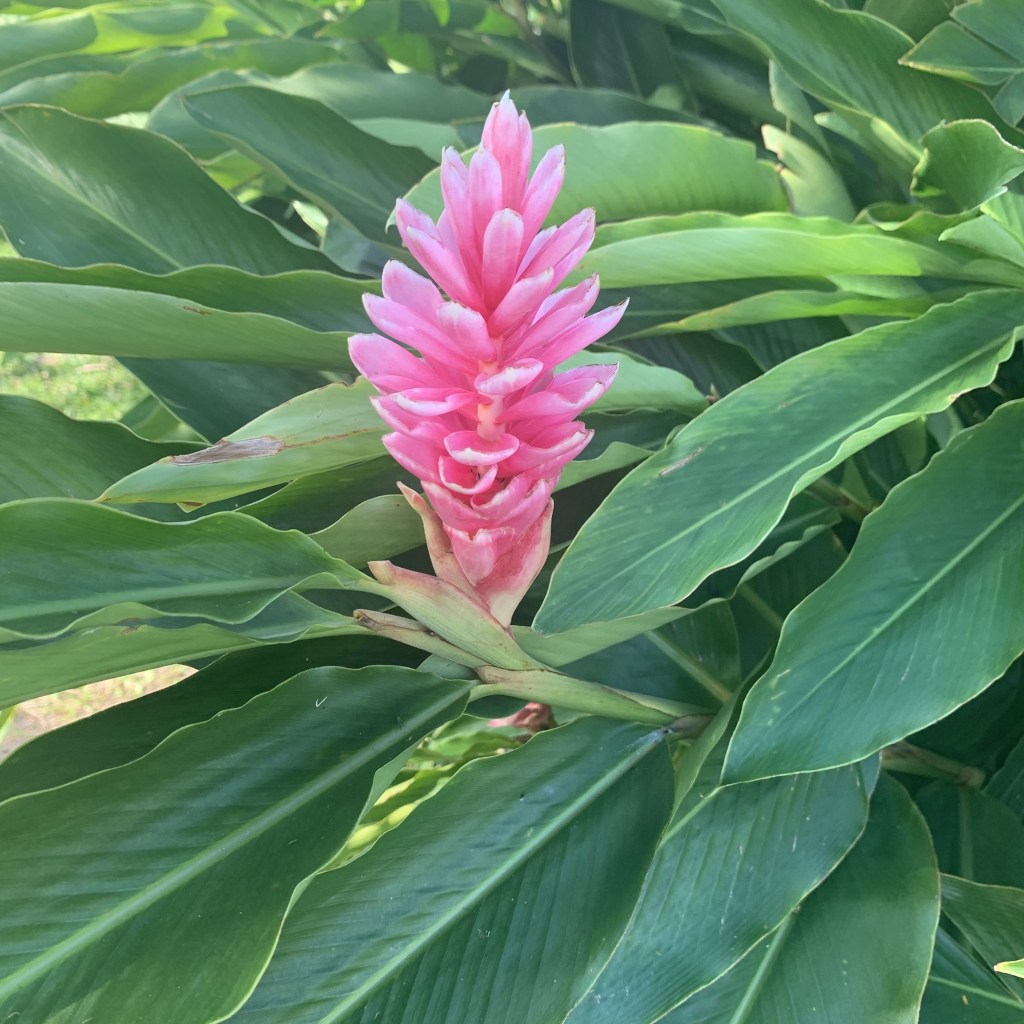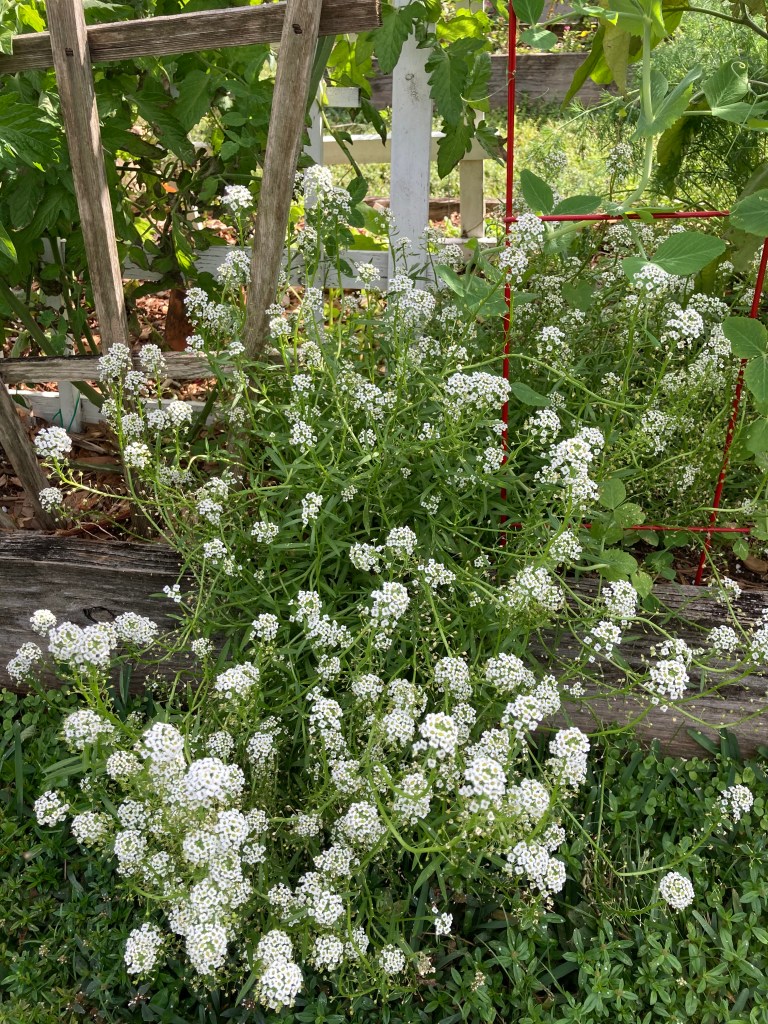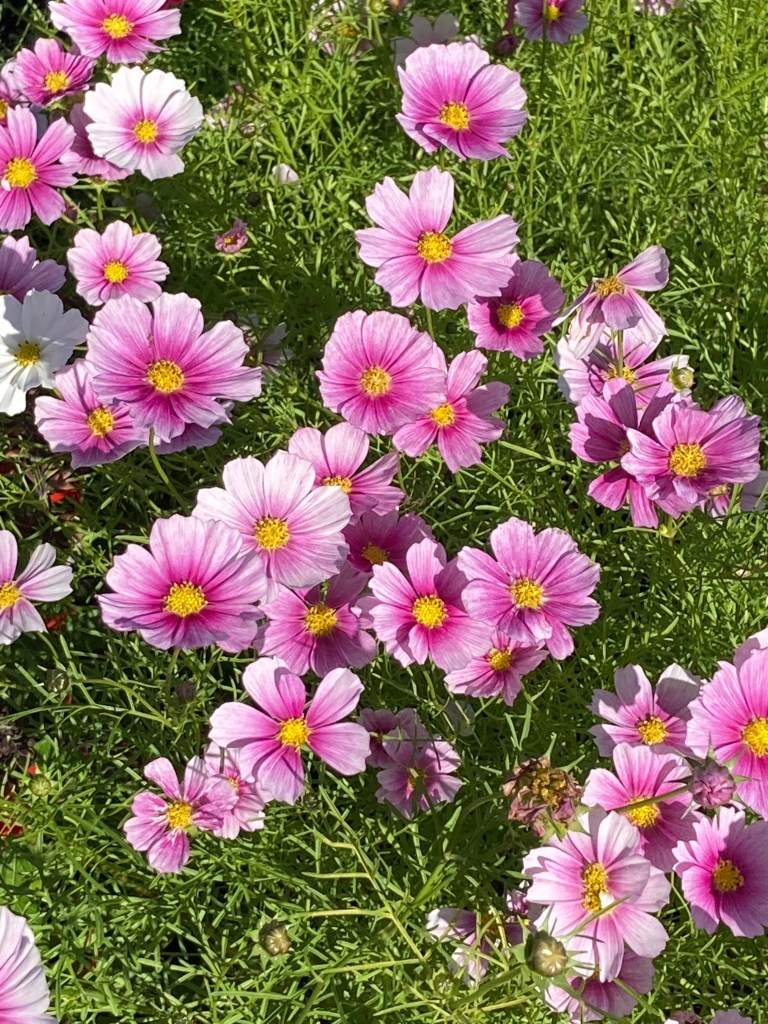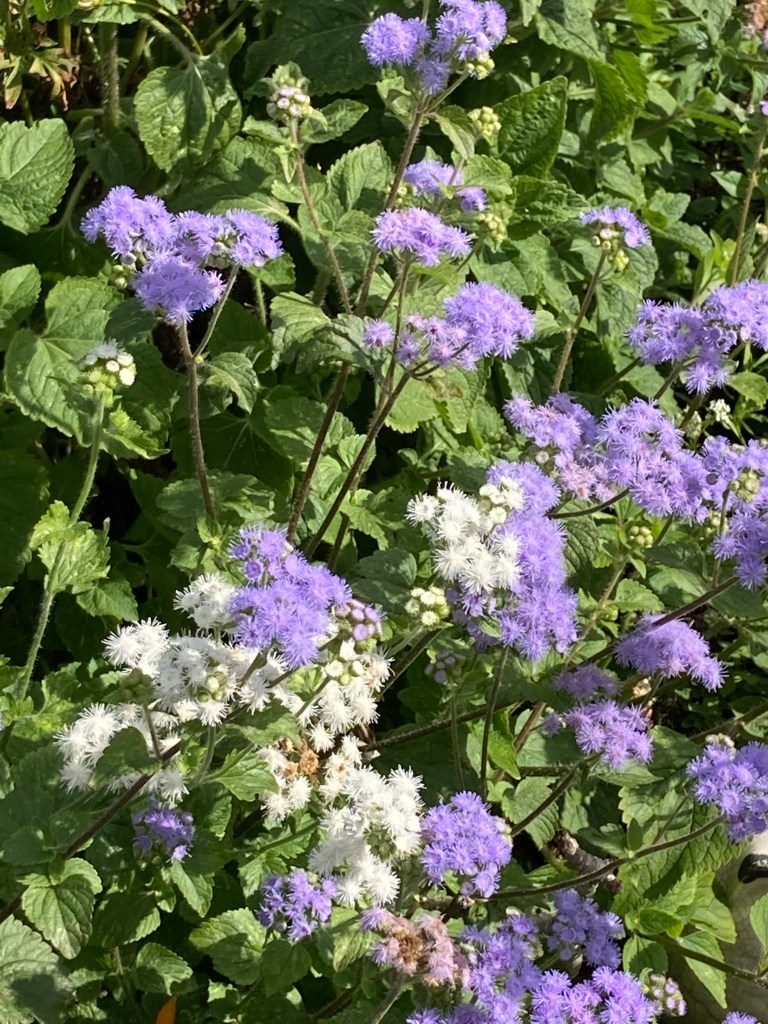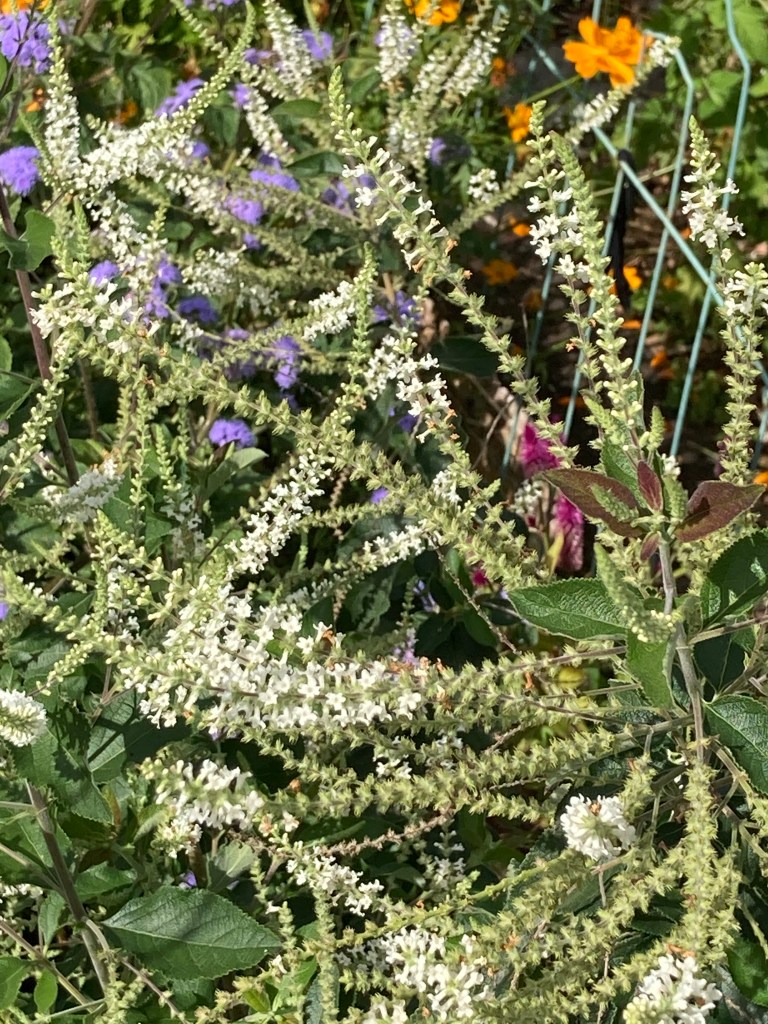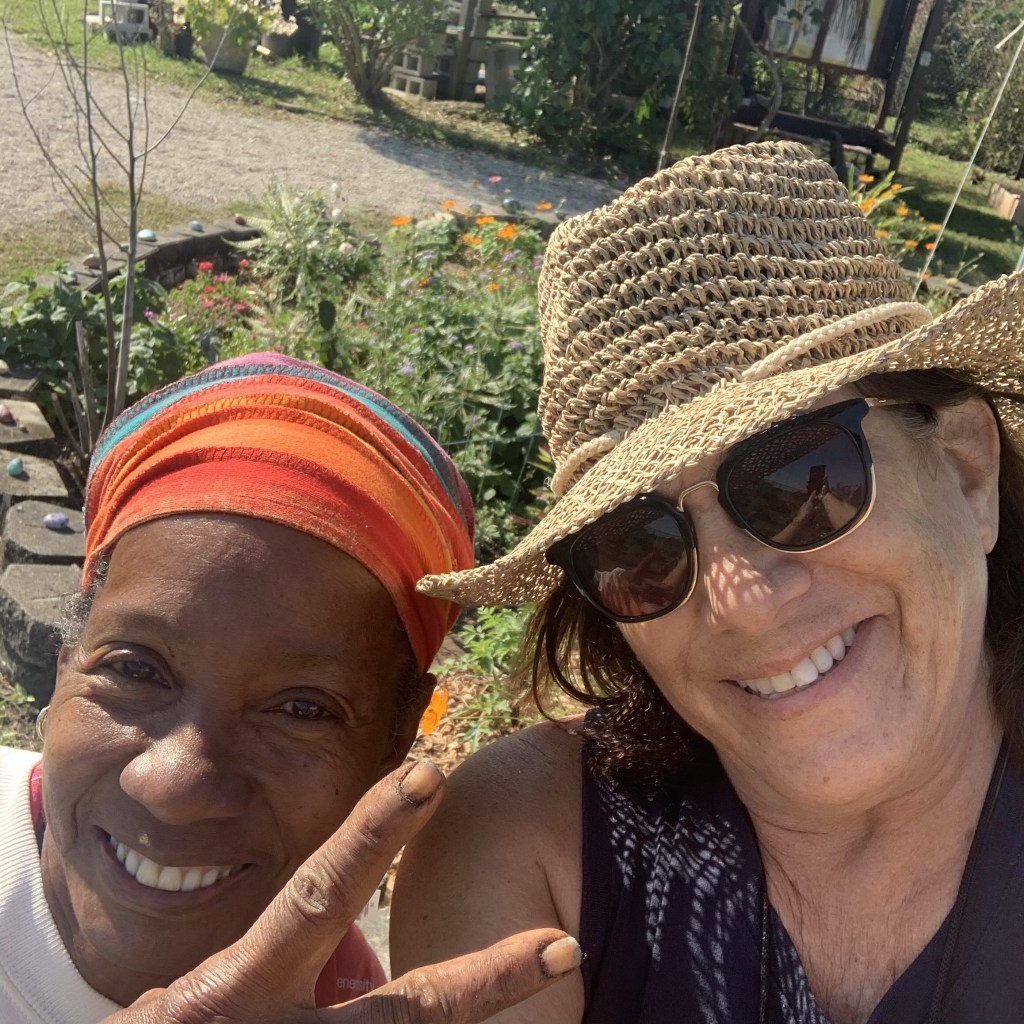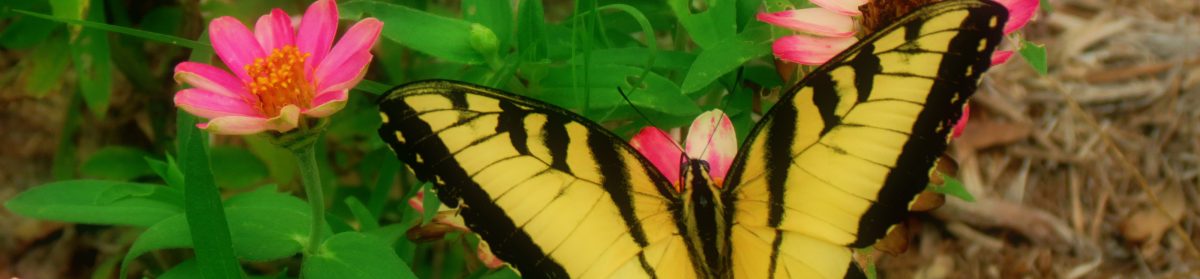
I agree with Ralph Waldo Emerson – the earth seems joyous when flowers are displaying all their colors. Here are a few photos of what is in bloom right now.
One of our gardeners, Satya, had great success growing cauliflower and shared a photo of one. It is a variety named “Freedom”. She purchased the hybrid seeds from Park Seed. They were started on July 26th under grow lights and harvested from the garden on January 22nd, so the growing time was approximately 120 days. This head of cauliflower weighed 2 pounds and 9 ounces! Soup anyone?
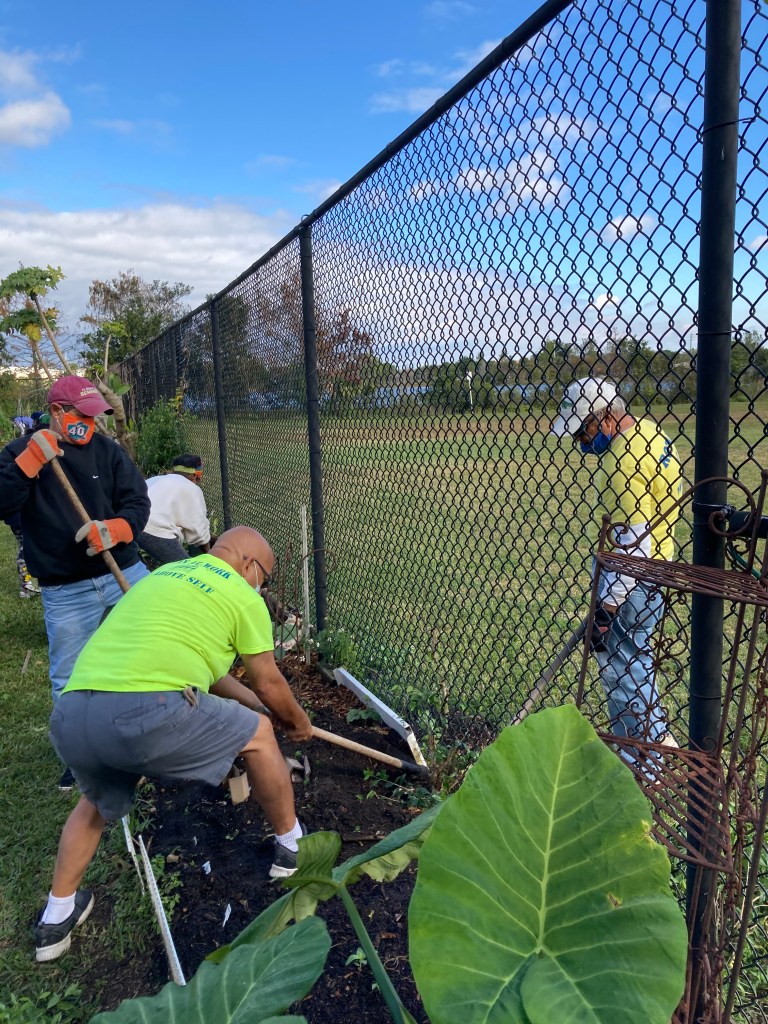
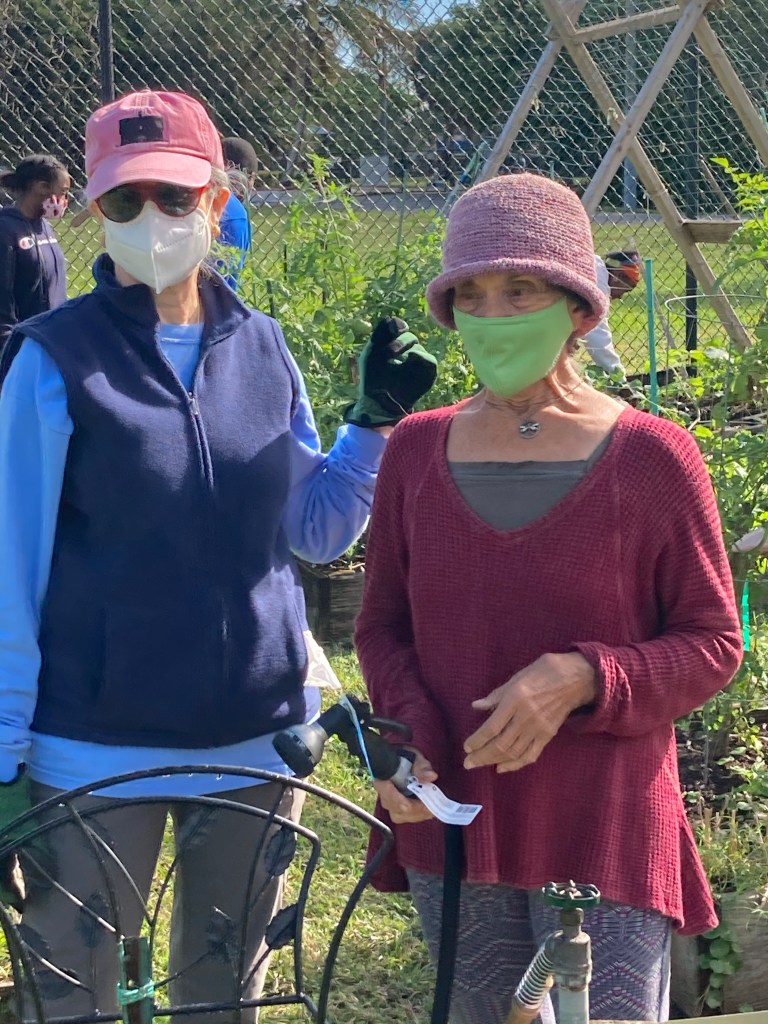
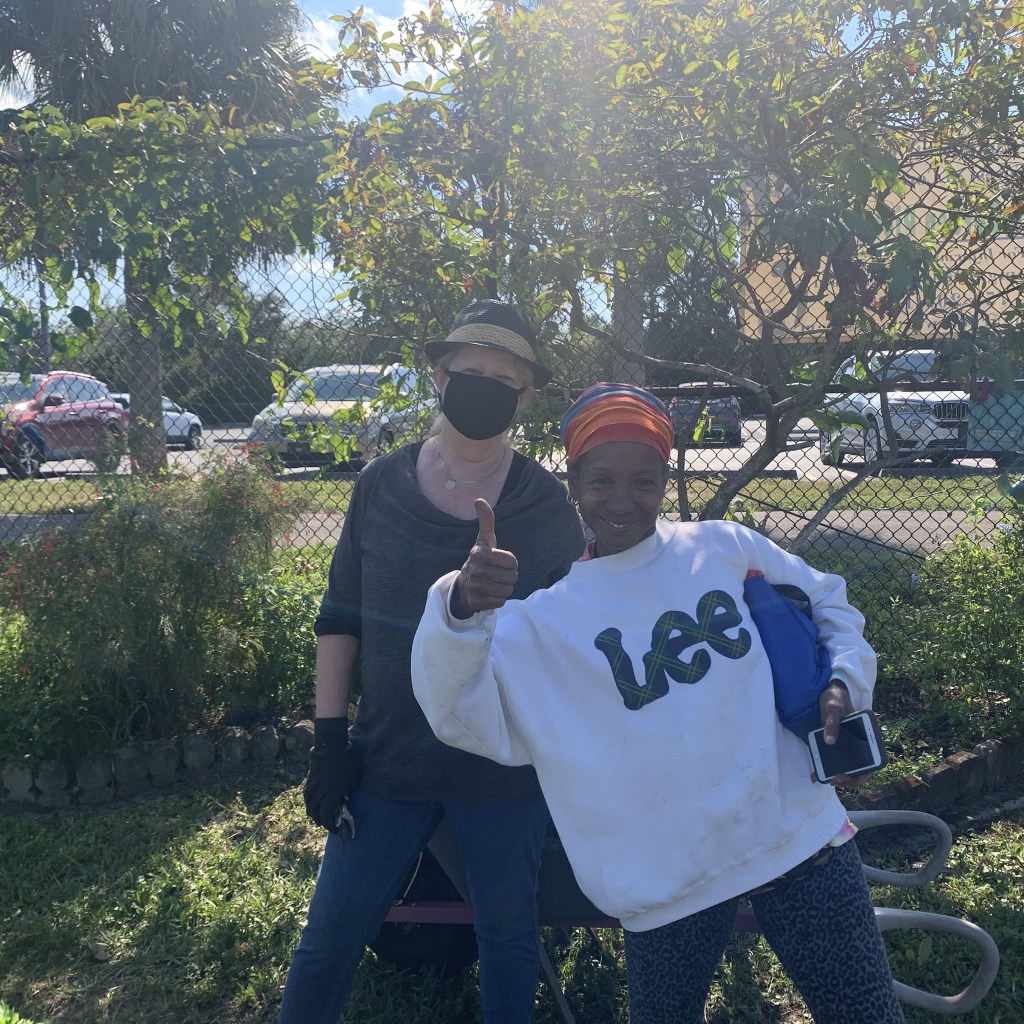
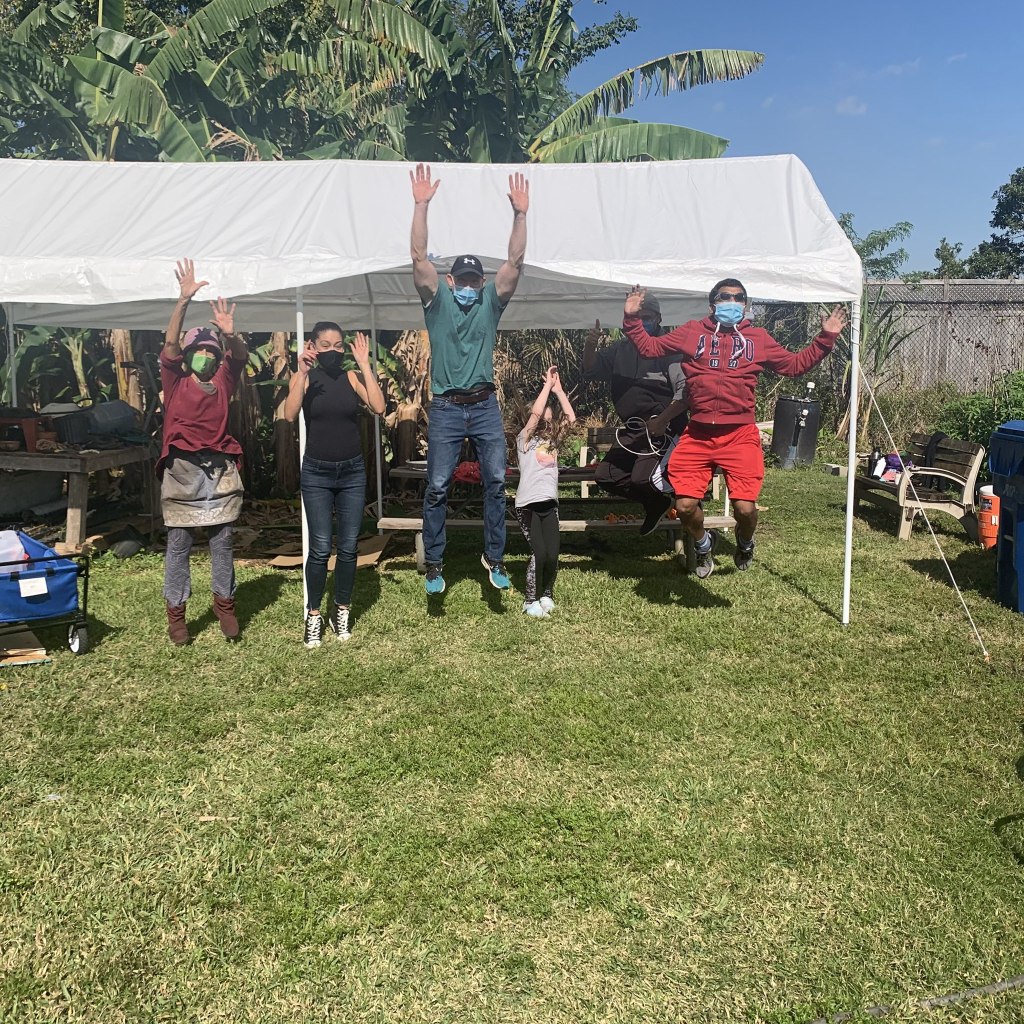
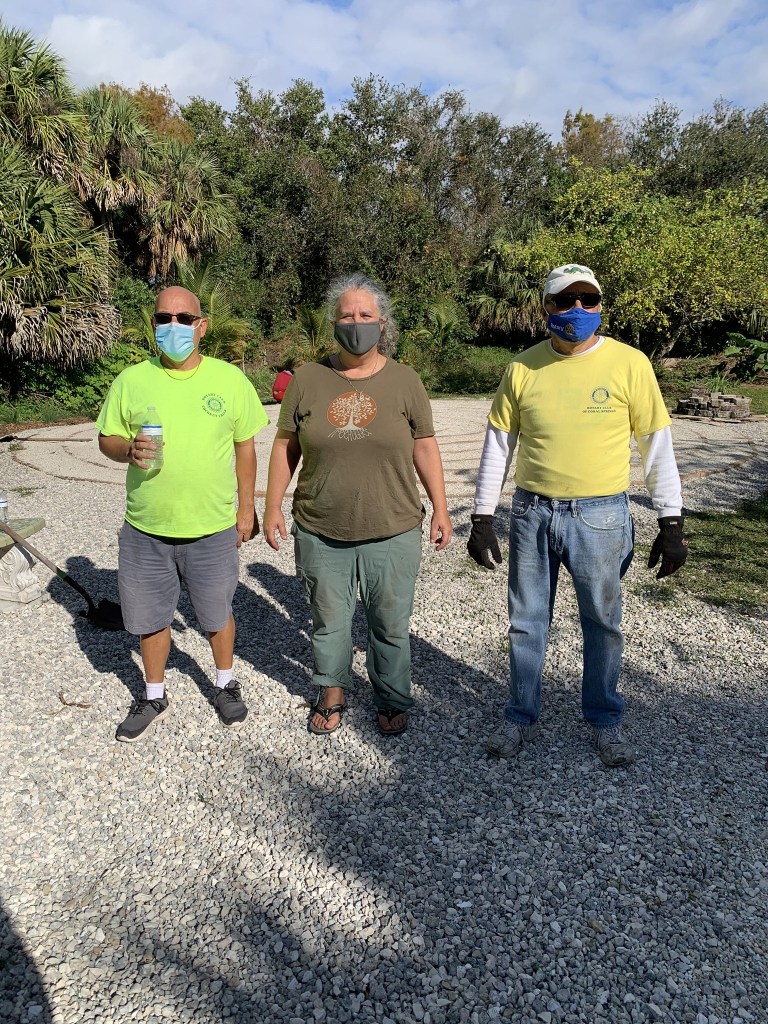
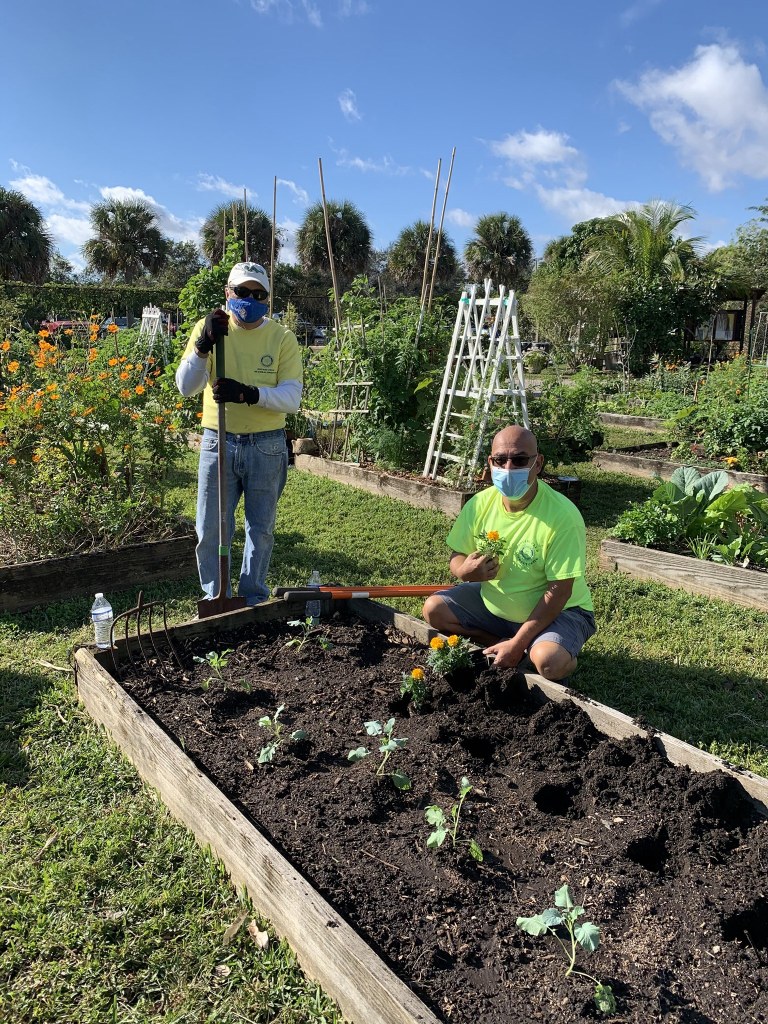
Incredibly beautiful weather and amazing gardeners made this a fantastic beginning to the new year! Volunteers planted Muhly grass and beauty berry in the food forest, while others tackled weeds in the garden. Rebuilding and moving the canopy was accomplished quickly with everyone’s help. They did all this while wearing masks and social distancing. We want to thank the Rotary Club members – Sal, Mickey and Scott – who came to volunteer, as well as Renata and Hilamar, Jackie (Renata’s friend), Lorin and his daughter, Viola and Mimi, Elizabeth, Janice and Kirsten! All contributed to make this a special day.
A co founder of the Rotary Coral Springs Community Garden, Judith Gulko, presented an overview of some local community gardens in Broward and Palm Beach counties during this Forum. Her presentation included information about the mission of each garden, the funding sources, and activities the gardens were involved in. Our community garden was included in her presentation. It was also pointed out during this online meeting that successful community gardens have 3 things in common:
1 – gardeners feel that that their food is valued
2- the garden donates produce to local community organizations
3 – gardeners plan celebrations to highlight special garden events
Thank you Judith Gulko for helping to make our garden a special place for all!
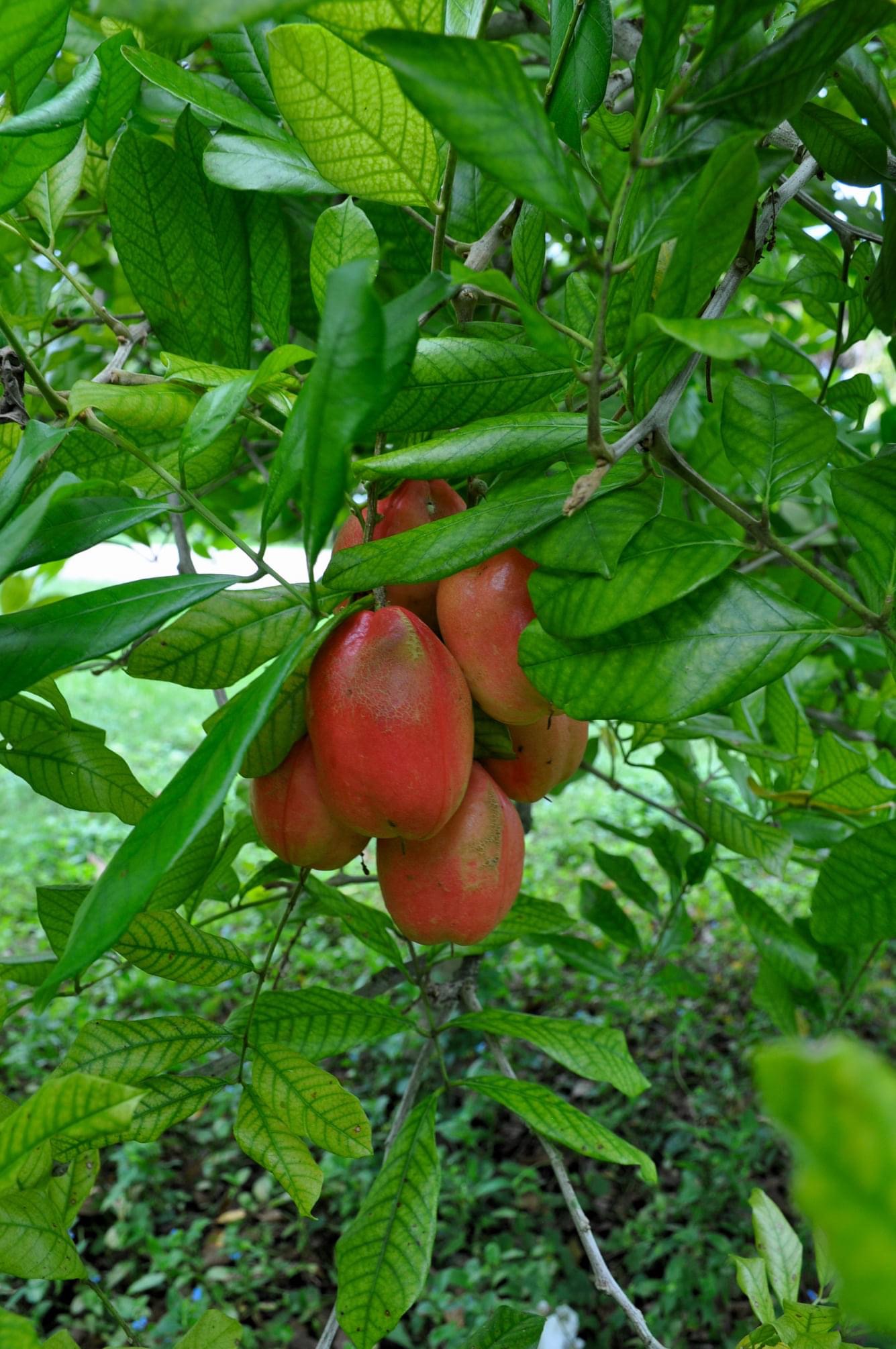
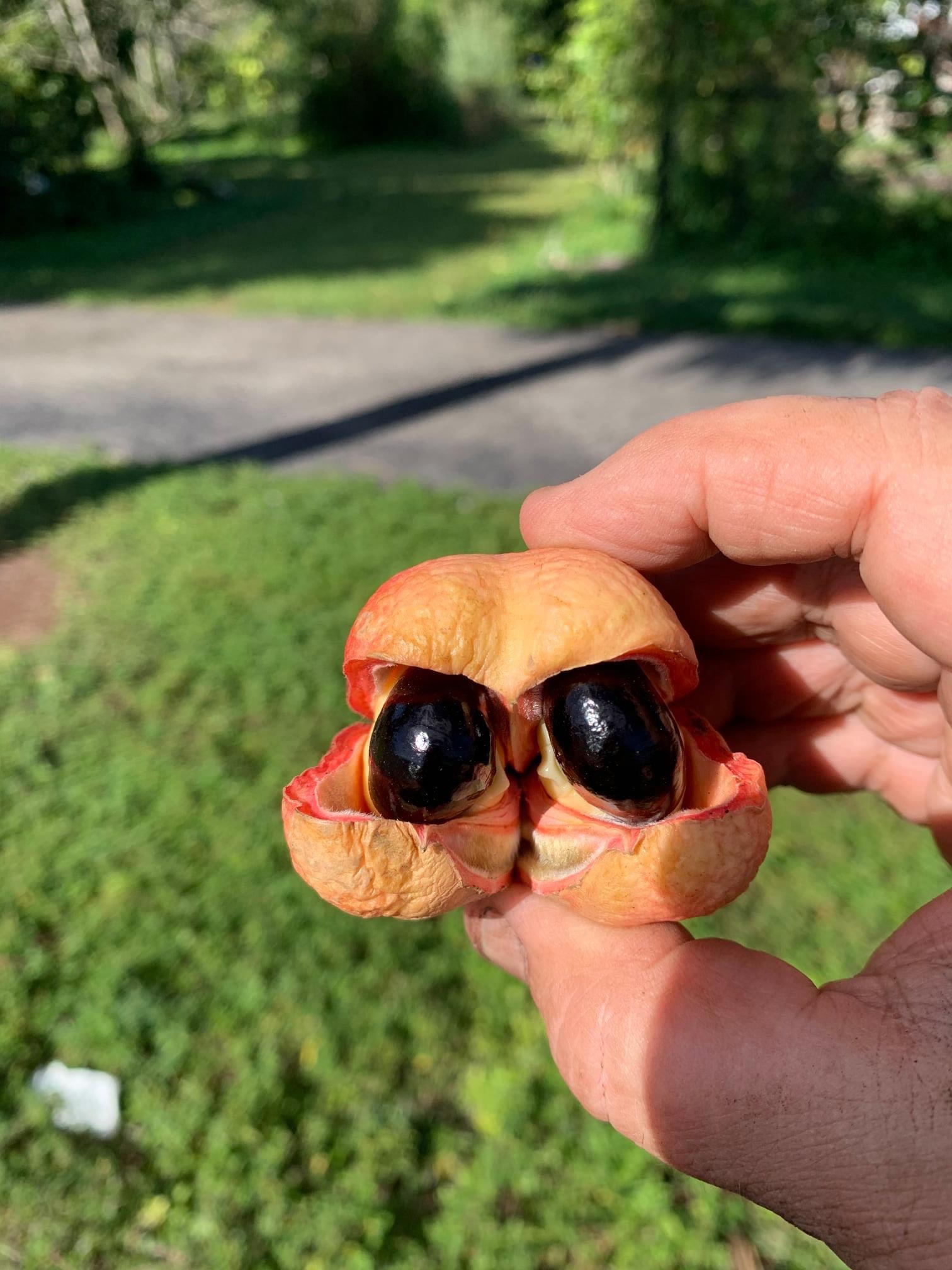
Many people who move from other parts of the country to Southern Florida may wonder what it is. Ackee is like the tomato, which is technically a fruit but is used like a vegetable. It is the national fruit of Jamaica, where it is cooked like a vegetable with saltfish.
There are several Ackee trees growing in the Food Forest which produce prolific amounts of the fruit. It grows on a tropical evergreen tree that’s native to West Africa, and also goes by the names achee, akee, and ackee apple.
Its fruit is fully developed, ripe, and suitable for cooking when the pods are bright red and they split open easily to expose the edible fruit inside. Jamaicans will often say that the fruit will “yawn” or “smile”—open naturally, on its own—before it’s ready to be picked from the tree. When the fruit opens, it releases a gas called hypoglycin. The pod opens to expose three or four cream-colored sections of flesh called arils underneath large, glossy black seeds. The arils are what you eat.
Soil has just been delivered this week for gardeners to fill their beds. It is located just outside the west gate next to the mulch pile. Many time people ask the question, “What is the difference between dirt and soil?” Soil is full of living organisms and the components that make up soil are natural and can be identified. Dirt has no life and dirt is often from an unknown origin.
We will see you on the 14th with starter plants, seeds, and hand made items for donations to support our community garden projects. It is unfortunate that Tropical Storm Eta has forced us to change the date of our fundraiser. We would like to take this opportunity to share some tips to keep your plants safe during the storm.
Mulch under your plants to prevent soil from splashing on them.
Do not cover them with plastic – it may become too humid for the plant
Give plants support from the wind with a trellis or stake.
Make sure there is good airflow around your plants so they can dry quickly.
If your plants are in containers, put them in a place safe from heavy rain and wind.